Commercial Aircraft Titanium Seat Fixtures


The Root Cause: Incorrect Alloy Entered the Supply Chain
It was recently identified that incorrect Titanium (Ti) alloy grade material was used during the manufacture and assembly process for some aircraft. Specifically, in fuselage floorbeam attach fittings, seat track splice, pressure deck area parts, Ram Air Turbine (RAT) forward fitting, aft cargo compartment forward barrier, and fitting links.
It was found that different Ti grades (Ti-CP, Ti Grade 5, Ti-6Al-4V) had been used when they should be as specified.
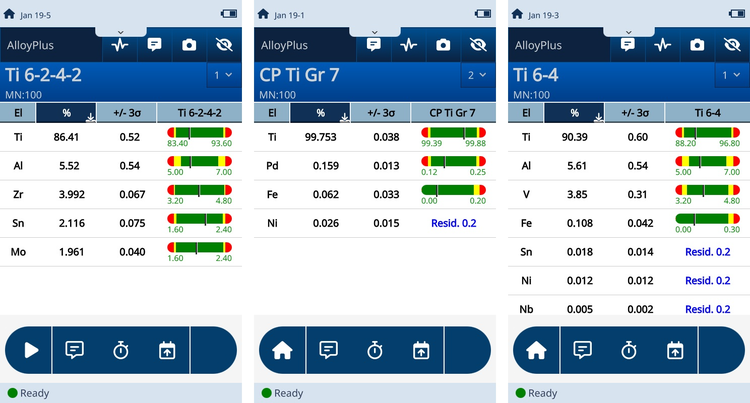
The service bulletin details rectification requirements for all affected aircraft, as well as a procedure utilizing handheld XRF to inspect parts in service to identify the alloy grade in use.
This is a lesson to be learned by all critical component manufacturing companies for aerospace that positive material identification (PMI) and correct Quality Assurance and Quality Control must be in place to ensure the correct alloy grade specification is selected, used and supplied. Inspection is critical as relying on material certificates from a supplier or stockist could result in mix-ups/human error.
The Risk at Hand: Why This Issue Demands Immediate Action
With the critical nature of these fittings, if the material is incorrect, it could have devastating consequences. Corrosion, strain, cracking could develop over time causing early failure of the components requiring significant rework in a best case scenario. In a worst-case scenario, seats or other components could become detached from the aircraft and cause serious injury or damage to the aircraft.
There is a need to check the alloy composition of installed components quickly and non-destructively; with as little AOG (Aircraft On Ground) time as possible. There is also the requirement to introduce stricter control of the quality of components being manufactured and supplied to aircraft manufacturers/assemblers to ensure the correct alloy specifications are being used, supplied and adhered to.
The Solution: Fast, Accurate Alloy Verification in the Field
The Evident VANTA Core (V2CR/V2CA) and Element-S (V2EL-SDD) Handheld XRF analysers are an ideal solution for rapid, accurate, non-destructive alloy chemical analysis of components. Whether in-situ, for raw materials before manufacture, or for components during and after manufacture; being able to accurately measure key elements such as Titanium (Ti), Aluminium (Al), Vanadium (V) and Nickel (Ni) in seconds allows immediate in-situ verification of alloy composition.
With an easy to use software interface, reporting capability to PDF/CSV including camera images (cameras are optional on Vanta Core) and well balanced, ergonomic design; the Evident Vanta Core and Element-S simplify the inspection and verification process.
Built to Mil-STD-810G 1.2m Drop Test and IP55/54 ingress protection against dust & water, the Evident Vanta range is designed to be used in harsh environments and well suited to use in the field, on the aircraft or in a manufacturing setting. Rugged physical detector protection is included to minimize risk of costly detector replacements from operator error.
Operational Considerations: Ensuring Accuracy in Real-World Conditions
While the analysis itself is non-destructive, achieving optimal accuracy, requires essential sample preparation. The analysis spot must be clean, flat, and free from surface contamination, scale, oxidation, or plating.
For in-situ components, minor surface grinding or abrasion may be necessary to expose the true base material and allow for accurate Aluminium determination (needed for separation of Ti alloys with differing Al concentrations). Operators must also ensure the sample geometry allows the analyzer's window to sit flush against the surface for consistent analytical integrity, as rough or curved surfaces can compromise precision.
The Takeaway: Strengthening Safety Through Verified Materials
The recent discovery of incorrect Titanium alloy grades in critical aircraft components serves as a stark reminder that material certificates alone are not a substitute for rigorous, on-site verification. In a high-stakes industry where the difference between Ti-CP and Ti-6Al-4V can impact the structural integrity of a fuselage or cargo bay, Positive Material Identification (PMI) is an essential safeguard. Implementing a robust QA/QC protocol using handheld XRF technology allows manufacturers and maintenance teams to intercept human error and supply chain discrepancies before they escalate into safety-critical failures or costly AOG (Aircraft On Ground) events.
By utilizing the Evident Vanta Core and Element-S analyzers, operators can achieve laboratory-grade accuracy in seconds, even in the demanding environments of a hangar or production floor. While factors like surface preparation and sample geometry require careful attention, the ability to non-destructively verify element concentrations such as Aluminum and Vanadium provides total confidence in material specification. Ultimately, adopting these advanced diagnostic tools doesn't just satisfy service bulletin requirements—it reinforces a culture of safety and precision that is foundational to the aerospace industry.