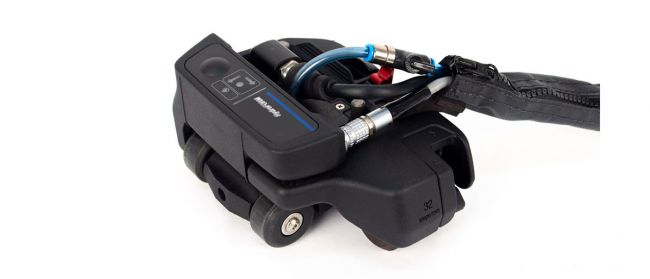
HydroFORM Polymer System: Expanding Corrosion Mapping Beyond Water-Based Coupling
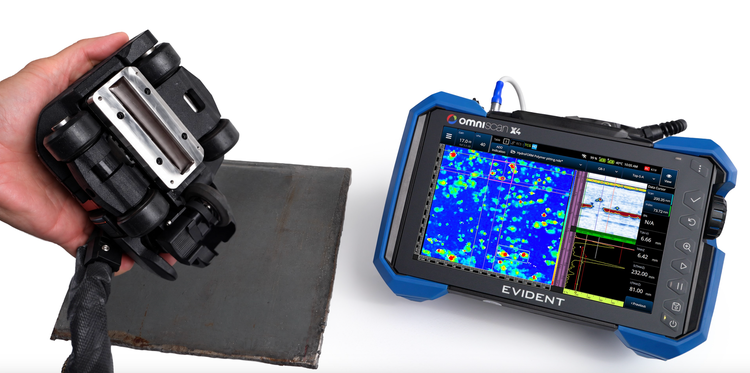

What happens when the water delay line becomes the limitation?
The HydroFORM™ scanner remains a proven solution for corrosion mapping on rough and irregular surfaces, where its water column technology delivers reliable acoustic coupling and high-quality data. However, some inspection environments push the practical limits of water-based coupling.
Hot assets can cause water to boil. Cold temperatures can freeze it. In rope-access applications, managing water supply and associated equipment can add complexity.
To address these challenges, Evident developed the HydroFORM polymer system, a solution that replaces the traditional water delay line with an innovative acoustically-friendly polymer delay line. The result is an expanded operating range from −20 °C to 175 °C (−4 °F to 347 °F) and greater flexibility in the field.
When Water Isn't the Right Choice
Water remains the preferred coupling medium for many corrosion mapping applications, particularly on rough or highly corroded surfaces. However, it becomes less practical when inspectors face:
- Elevated temperatures near the boiling point of water
- Freezing environments
- Limited access to a reliable water supply
- Rope-access or difficult-to-reach assets
These conditions are common in oil and gas, power generation, petrochemical, and process manufacturing facilities.
A Polymer Delay Line Designed for Field Use
Traditional polymer delay lines have often been associated with sticking, contamination, wear, and inconsistent coupling.
The HydroFORM polymer system addresses these challenges through a delay line and membrane design that:
- Maintains consistent contact during scanning
- Protects the couplant from contamination
- Improves signal stability
- Reduces sticking and drag
- Minimizes wear and extends service life
This results in smoother scanning experience and more consistent data collection across large inspection areas.
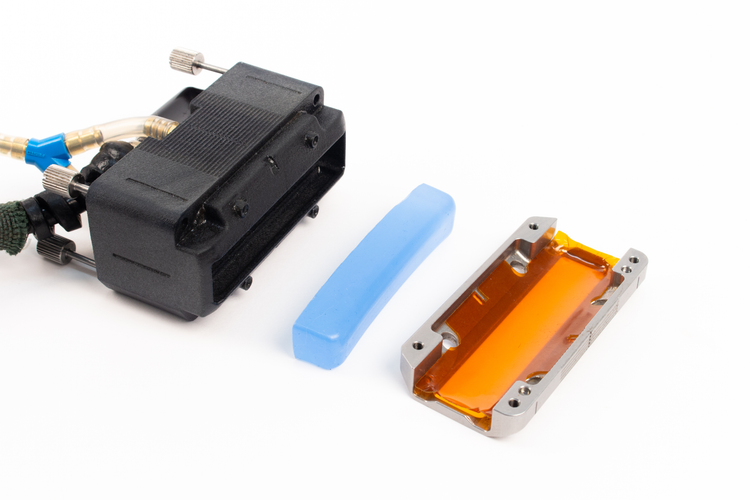
Corrosion Mapping on Hot Assets up to 175 °C
As water heats up, vapor bubbles can form in the ultrasonic path, reducing signal quality and affecting inspection performance.
The HydroFORM high-temperature polymer system avoids this limitation and supports inspections on surfaces up to 175 °C (347 °F).
This capability allows inspection teams to evaluate assets while they remain in operation, enabling inspections of up to 30 minutes without lengthy cool-down periods.
Reliable Inspection in Cold Conditions
The polymer system also expands HydroFORM capabilities into low-temperature environments where water-based coupling becomes difficult or impossible.
A dedicated low-temperature polymer formulation enables inspections from −20 °C to 50 °C (−4 °F to 122 °F).
Typical applications include:
- Outdoor pipelines
- Refrigeration systems
- Chilled process equipment
- Cold-storage facilities
- Low-temperature vessels and piping
For inspections in northern climates or winter operating conditions, reliable coupling can be maintained without concerns about freezing water.
Simplifying Rope-Access Inspections
The polymer system offers another practical advantage: reduced equipment requirements.
Because no continuous water flow is needed, inspection teams can work with fewer accessories and less logistical support.
Benefits include:
- Faster deployment
- Reduced setup complexity
- Fewer hoses and peripherals
- Improved mobility
- Greater efficiency in difficult-access assets
For rope-access and elevated inspections, reducing equipment can simplify operations and improve productivity.
Water or Polymer: Which Should You Choose?
The two options are complementary rather than competitive.
The polymer system does not replace the HydroFORM's water column technology. It extends the range of applications that can be inspected using the same HydroFORM scanner platform.
Expand Your Inspection Window
The HydroFORM polymer system enables corrosion mapping across a wider range of operating conditions, from −20 °C to 175 °C (−4 °F to 347 °F), while reducing dependence on water-based coupling.
Whether the challenge is temperature, accessibility, or logistics, the polymer system helps inspection teams collect reliable corrosion mapping data in environments where traditional water delay lines may not be practical.