RTIS: 회전식 튜브 검사 시스템
RTIS는 위상 배열 기술을 사용하여 튜브 전체를 검사합니다. 이 시스템은 신속한 결합과 짧은 비검사 거리를 제공하는 영구적이고 안정적인 물 챔버를 유지하기 위해 막을 사용하는 '물 쐐기(Water Wedge)' 개념에 기초합니다.
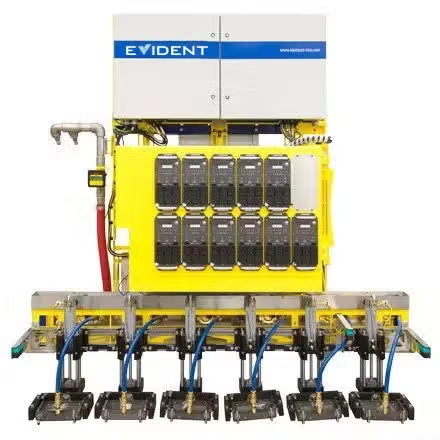
The rotating tube inspection system (RTIS) is a turnkey solution that uses phased array probes integrated into a fully automated testing system to meet stringent requirements for volume and surface inspections. Key benefits include:
- Minimize your dependency on operator skill with automatic calibration
- Detect defects at production speed with calibration check
- Familiar to major oil companies
- Detects oblique defects to meet current and pending industry standards
- Get the most out of the system with 2D mapping and end-of-tube inspection capabilities
Designed to be an easy-to-use solution for helping ensure the quality of seamless and electric resistance welded tubes, the system includes:
- Dedicated project management
- Instruments, probes, and mechanical equipment
- Water management system
- Software
- Commissioning, training, and after-sales support
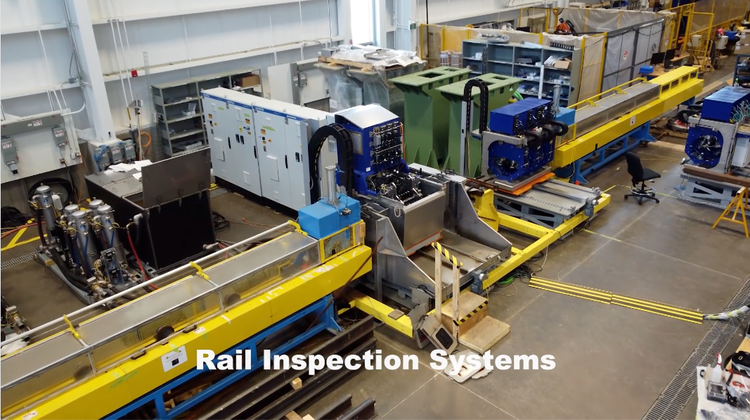
Full Body Tube Inspection
Inspect for longitudinal, transverse, oblique, and lamination defects, and measure wall thickness.
- Novel water wedge enables many degrees of freedom to accommodate pipe movement and provide excellent coupling
- Design leaves only small untested tube ends
- Automatic calibration for repeatable results
- High sensitivity on small reference defects with a signal-to-noise ratio greater than 12 dB
- Can be used to fulfill testing regulations (API-5CT and API-5L)
Longitudinal
Transverse
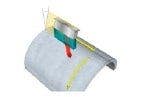
Oblique
Maximize Your Productivity
The system is adaptable and can be configured to suit different types of inspections.
- The number of inspection heads or electronics can be adapted to meet the required productivity level
- Up to four apertures per phased array probe can be fired simultaneously
- Large mechanical scan overlap covering up to 120 mm/r
Automatic Calibration
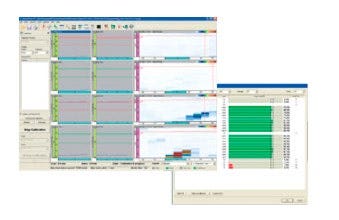
To achieve a thorough inspection, each phased array probe must be calibrated. During calibration, the apertures of each probe pass over a known defect, and the probe’s gain level is automatically adjusted. This feature enables users to easily perform and validate a precise calibration of each focal law, saving time without relying on the user’s skill.
- All probes can be calibrated in a single automatic sequence
- Calibration check performed under normal production conditions
- Each reference defect is validated to help ensure they’re detected above the alarm level
- Results are displayed in an easy-to-interpret strip chart and weld mapping view
Software and Acquisition Unit
The combination of phased array probes, a powerful acquisition unit, and advanced software work together to deliver a powerful, easy-to-use inspection system.
Phased Array Acquisition Unit
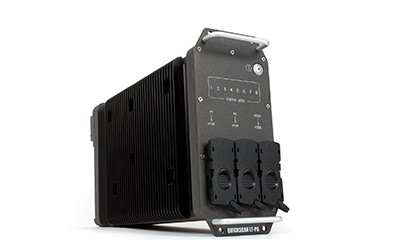
The QuickScan™ PA 32:256 module meets IP55 standards and is designed to easily integrate into industrial environments.
Easy Setup
QuickView software makes it easy to setup the system and acquire and manage data.
The software’s wizard makes it simple to create setups for each part size. The inspection configuration and calibration parameters for each pipe diameter are saved and easily retrievable. The final results are merged and displayed to clearly differentiate between accepted and rejected tubes.
- Quickly access predefined inspection setups
- Software wizard makes it simple to create new setups
- Restrict access to certain users to help minimize operator errors
- Calibration and inspection info are stored for traceability
- Acquisition files are created for every inspected tube, and these data can be stored locally or remotely
- Custom reporting and advanced process control tools
Clear Results
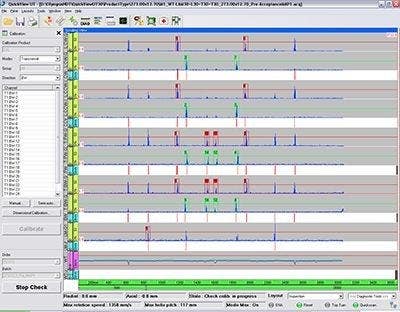
When the inspection is complete, the results are merged and displayed to clearly differentiate between accepted and rejected tubes.
- Easy-to-interpret inspection results with real-time strip chart displays
- Quickly reconfigure when changing pipe sizes
- Detailed alarms and data reporting
- Supervisor software that merges and archives data in one common database and centralizes results and displays on a single work station
- Easily interfaces with two production line systems
Specifications
244.4 mm (9 5/8 in.) : 0.25 m/s (50 ft./min)
406.4 mm (16 in.) : 0.15 m/s (30 ft./min)
3.2 mm and 1.6 mm through-drilled hole (TDH), 6.35 mm flat bottom hole (FBH)
T and Ob notches: < 3 dB
TDH 3.2 mm and FBH 6.35 mm: < 4 dB