应用笔记
Technique
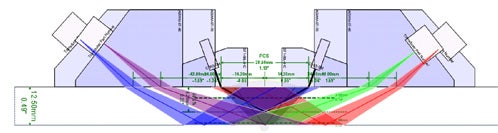
The PV100 system is based upon two ultrasonic technologies- Time of Flight Diffraction (TOFD) and Shear Wave Pulse Echo Ultrasonics (angle beam). While TOFD is a fast and effective testing solution that provides unparalleled detection of oriented defects as well as superior through wall height measurements, it has an inherent weakness in the cap and root area. Shear Wave is a perfect compliment as it provides coverage of this area while still maintaining rapid scan speeds. (See included Tofd Theory PDF for more in depth information of TOFD). It is often employed to replace radiography or manual ultrasonics. The PV100 is a semi-automatic (encoded, operator driven) technique that stores data acquisition against distance moved, producing a digital file that can be archived as well as post processed/analyzed. Typical scan time varies upon diameter of component or length of weld. The configured system will provide full coverage of the weld; some of the advantages of the TOFD and PV100 technique are detailed below.
Advantages of TOFD
- One-line, volume inspection
- Very fast scanning
- Setup near independent of weld configuration
- Precise defect sizing capability based on TOF
- Very sensitive to all kinds of defects
- Almost completely insensitive to defect orientation
- Amplitude insensitive, acoustical coupling less critical
Advantages of PV100 System
- Reduced inspection times compared to raster scanning or radiography
- Potential for reduced manpower
- Root, cap, and mid-wall coverage simultaneously in a one line scan
- Accurate location, characterization, and sizing of defects - directly on the Ominscan or through Tomoview software
- Flexibility - easily adjustable to varying diameters, thicknesses, and weld configurations
- Full A-scan data with imaging and post processing = good replacement for radiography with no radiation hazard!
Complete setup on .5" single V Butt-weld
60 Degree TOFD to cover the weld
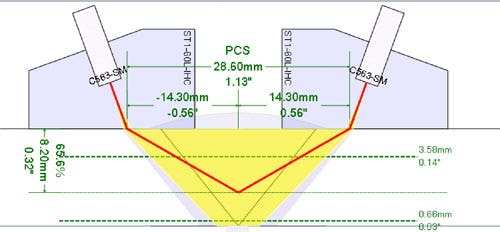
70 Degree shear wave to focus on root area (angle may vary to design and Thickness)
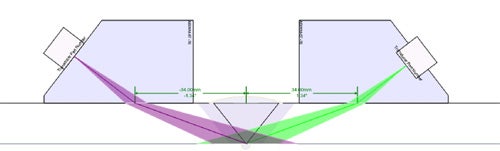
60 Degree Shear Wave to Focus on the Cap area (angle may vary to design and Thickness) (Image)
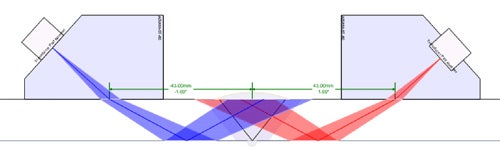
Tofd utilizes highly dampened transducers set into refracted longitudinal wave wedges to produce a very wide beam L-wave to cover the area of interest. Unlike Pulse-Echo it utilizes a pair of transducers in pitch-catch configuration (1 send, 1 receive probe). Detection of defects is based on Huygens's principal- basically when an object is hit with a wave of energy the object will vibrate, thus emitting diffracted energy in all directions as well as reflected energy. These Omni-directional diffracted waves will be picked up by the receive probe.
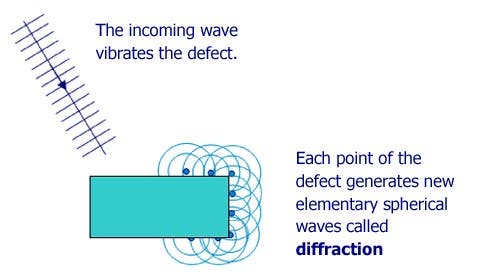
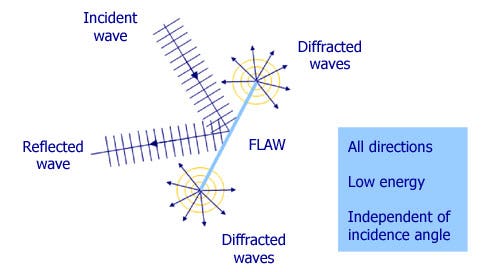
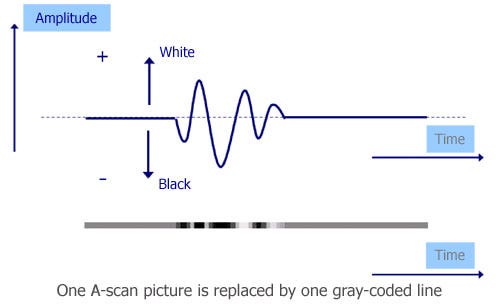
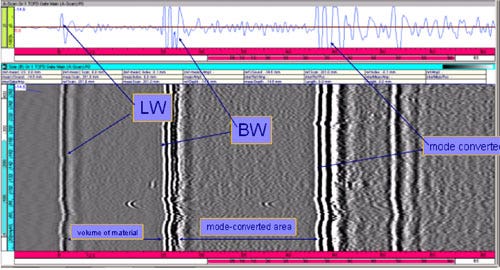
These signals are then processed by phase/amplitude (+/-) and time of flight (us) and displayed using a grey scale palette.
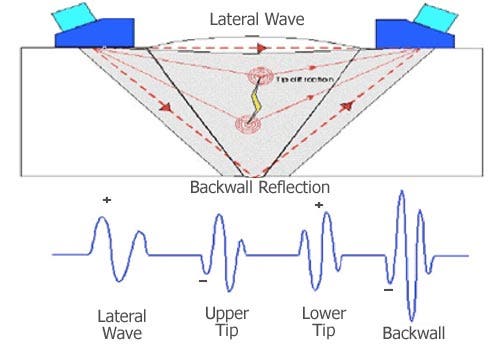
Details of wide beam subcomponents and data display- lateral wave (sub near surface), backwall, and volume of the material. (image)
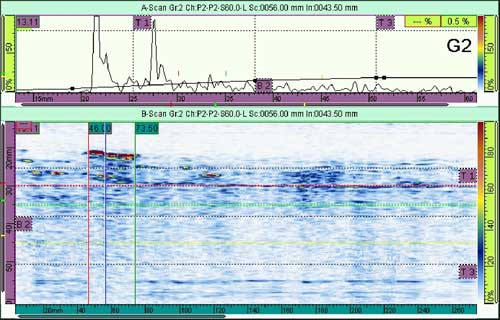
The Shear Wave transducers are common mono-crystal (composite) ultrasonics transducers fitted into 45, 60, 0r 70 degree wedges. In order to facilitate analysis of the often large scan area, B-scan (side view) imaging is employed, colors are based on amplitude.
Setup and Equipment
Proper positioning of the TOFD and Pulse Echo transducers is established from software (see included Beam Tool report), table of positions, or written procedure. Because code requirements vary from industry to industry the required equipment and setups may vary. Currently customers are utilizing the PV100 most commonly under AWS (Part G 6.36) and ASME (CC 2235-9, see included PDF) requirements. Depending on code requirements, performance demonstration and calibration blocks may also have to be acquired. The equipment is sold as a package to include all the necessary equipment to cover the range of thicknesses, weld designs, etc. Once setups/calibrations are created and stored they can be recalled from the Omniscan platform.
Main Components
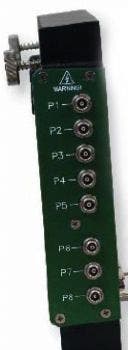
8 Channel Acquisition
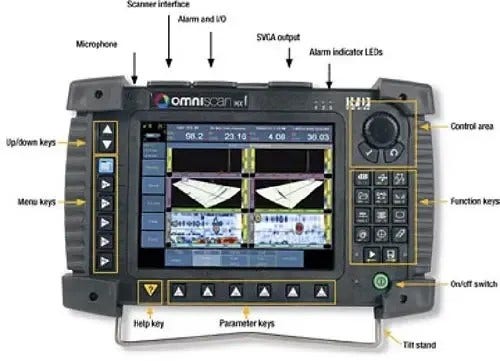
Module Omniscan MX Mainframe
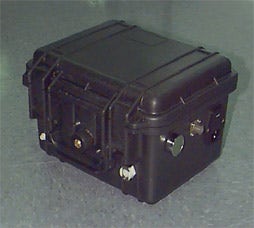
Couplant Pump
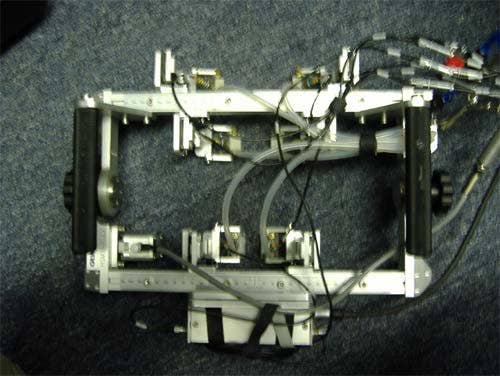
Also:
- Tomoview Software for faster post analysis (Analysis can be done directly on Omniscan)
- Probes/Wedges/Umbilical Cable/Calibration Blocks, etc vary
Analysis and Reporting
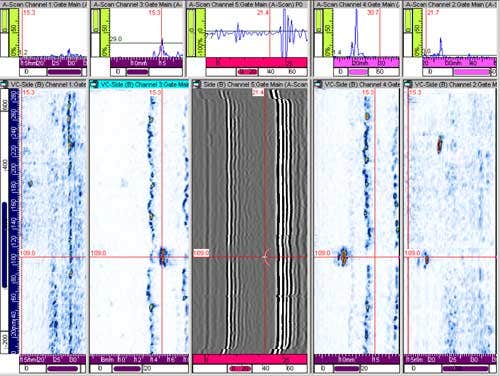
Analysis and reporting can be done directly on the Omniscan or in TV or TV Lite Software.
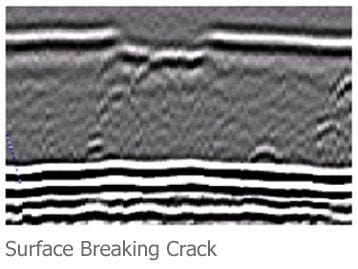
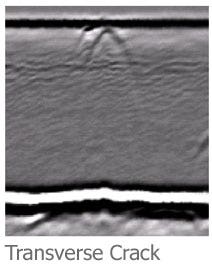
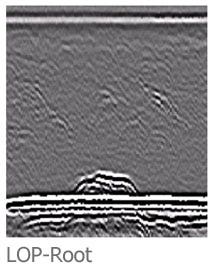
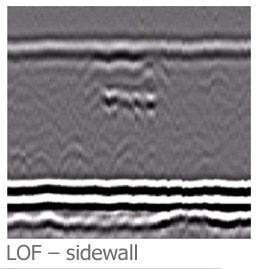
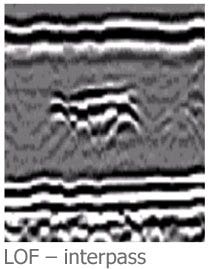
Typical Layout and data in TV Lite
Training
Training on equipment operation can be done by Evident personnel. This training encompasses Tofd and Ultrasonic theory, equipment setup, scanning and analysis. A step by step written procedure will be used and provided to the customer with probe position guidelines. Depending on code requirements it may be necessary to have a certified Level III write a procedure, this service is available through our training partners. Our certified training partners also provide scheduled classroom training and customer/site specific training including PV100. For more information on training please visit our Training Partners page.