Gold Analysis Testing Guide
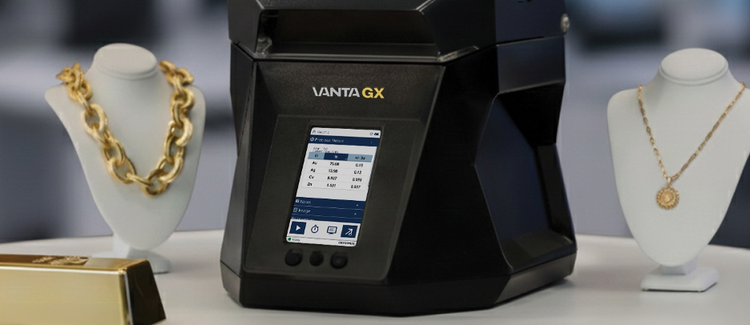
Gold Karat Testing: Practical Clarity in a Market Where Mistakes are Expensive
Gold has never been more valuable—or more risky. As prices hit record highs, the market reacts fast, more gold changes hands, and more suppliers appear.
Inevitably, this also means that more fakes enter the supply chain.
For traders, refiners, jewelers, and pawnbrokers, the cost of getting it wrong has never been higher. Protecting yourself requires more than a single device or a single test. It requires understanding what you're testing, which methods apply, and how to combine them in a way that gives you genuine confidence.
There is No “One-Button” Gold Testing Method
The most important thing to know about gold testing is also the most frequently misunderstood: no singular method, device, or technique can guarantee gold authenticity on its own. Real confidence comes from using the right methods in the right combination, with realistic expectations about what each one can and cannot do.
This isn't a limitation of any one technology—it's a fundamental reality of how today’s fakes are made and how analytical methods work. A combination of multiple methods is the foundation of an effective gold testing approach.
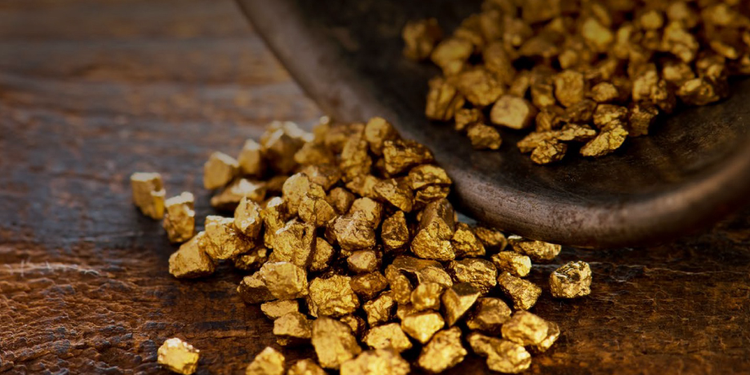
Destructive vs. Nondestructive Gold Testing
Gold analysis falls into two main categories: destructive and nondestructive. Understanding what each testing method entails is essential to choosing the right analysis workflow for your operation.
Destructive Methods: Highest Accuracy, Lowest Throughput
Fire assay (cupellation), ICP, and atomic absorption are the most accurate testing methods available, capable of ±0.05-0.1% accuracy on gold content. They are also destructive, require specialized equipment and facilities, and take hours or days per sample. In commercial environments where dozens or hundreds of pieces may need to be evaluated daily, these methods serve best as final arbiters, not first-line screening tools.
Nondestructive Methods: Speed, Versatility, and Practical Tradeoffs
Density measurement, conductivity testing, ultrasound, and portable XRF all leave the sample intact. Each has a distinct role in a multi-method workflow:
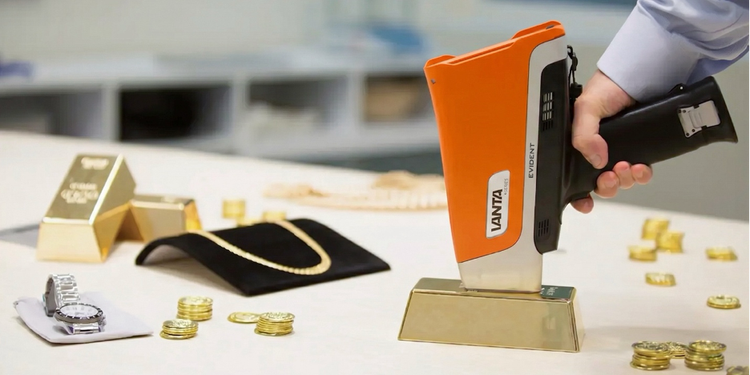
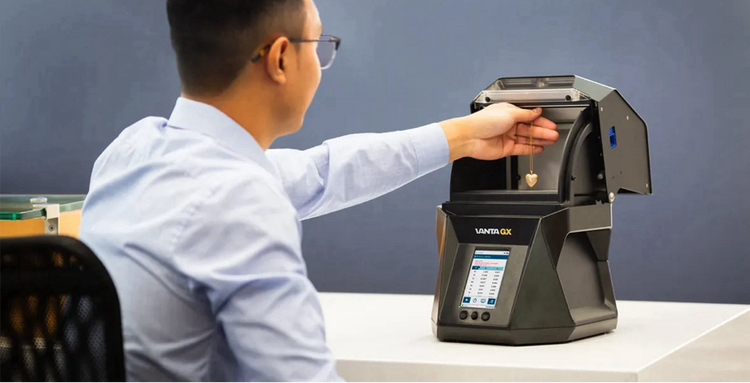
- Portable XRF: Delivers multi-elemental results in seconds with no sample damage. Identifies gold content (karating and fineness) and alloying elements, detects coatings, and can calculate expected density and conductivity from measured composition. The most versatile first-line tool available.
- Density Measurement: Verifies that a sample's physical mass-to-volume ratio matches the composition measured by XRF. Highly effective for monolithic samples (bars, solid jewelry). Less reliable for items with gemstones, hollow sections, or complex geometries.
- Ultrasound: Detects internal voids and foreign materials. Especially valuable for gold bars, where tungsten inserts (a common high-end counterfeit technique) are nearly impossible to detect by surface analysis alone. Requires flat, accessible surfaces.
Conductivity: Provides supplemental chemical characterization. Results can vary with sample temperature and geometry, so it functions best as a cross-check rather than a primary method.
What Accuracy Really Means: ±0.01% is a Myth
One of the most persistent misconceptions in the gold testing market is the expectation that an XRF gold checking machine can deliver ±0.01% accuracy. It cannot—and neither can any other commercially available method. XRF accuracy is constrained by several real-world factors:
- CRM Uncertainty: The certified reference materials used to calibrate XRF analyzers carry inherent measurement uncertainty. A standard 18K white gold CRM, for example, has a certified uncertainty of approximately ±0.11%—and that uncertainty is baked into the best possible XRF performance before any other variable is introduced.
- Surface Heterogeneity: Gold concentration is not perfectly uniform across a sample surface. Depending on how a piece was cast, melted, and cooled, gold content can vary by more than 1% across just two square centimeters. This variability comes from the sample, not the instrument.
- Sample Size & Positioning: A sample that fully covers the measurement window produces better statistical results than one positioned partially within the window or at an angle. Maximizing beam coverage is one of the most effective ways to improve accuracy.
- Statistical Measurement Uncertainty: All X-ray-based measurement carries inherent statistical variation. Higher-count instruments reduce this, but cannot eliminate it entirely.
- Calibration Scope: A generic out-of-box calibration covers common alloy families pretty well. Accuracy improves meaningfully when calibration is tailored to the specific alloy types being tested.
In practice, with a 10-second test and standard calibration, realistic XRF accuracy is approximately ±0.4%. With application-specific calibration and consistent testing protocols, this improves to approximately ±0.2%. These are honest benchmarks—and they represent dramatically superior throughput compared to laboratory alternatives, which operate in the same accuracy range but at a fraction of the speed.
Hallmarks are Declarations, Not Analytical Proof
A common error in gold testing is treating a hallmark as a reference point for comparison, i.e., measuring a piece with XRF and then questioning the result when it doesn't exactly match the stamp. Hallmarks are regulatory declarations, not chemistry. You should verify them, not trust them as ground truth.
A scientific study of 68 pieces hallmarked at 585 fineness (14K) found that approximately 25% did not match their stated purity1. Even among correctly hallmarked pieces, actual gold content varied meaningfully from the declared value—sometimes above, sometimes below. A properly calibrated XRF analyzer, for conventional yellow gold alloys, is a more reliable indicator of actual composition than a hallmark stamp.
How Counterfeits Are Made—and How to Catch Them
Modern gold counterfeits fall into four main categories, each requiring a different detection approach:
- False Gold: Base metal items with no gold content. The easiest category to detect—XRF immediately identifies the non-gold composition, and a simple magnet test eliminates many common fakes.
- Electroplated Gold: A thin gold layer deposited over a base metal substrate. The cheapest and most common counterfeit technique. XRF detects the coating if it's thinner than approximately 15-20 microns and typically displays a coating warning. Most standard jewelry plating falls within this detectable range.
- Thick-Coated or Gold-Filled Items: When plating exceeds XRF's penetration depth, the analyzer sees only the surface layer—and interprets the entire piece as solid gold. An 18K gold plating over a stainless-steel core, if thick enough, will read as solid 18K to XRF. This is the most problematic category for surface-only analysis.
- Hollow Gold: Bars or items with internal voids or foreign material (tungsten inserts being the most sophisticated example). Density testing and ultrasound are the most reliable detection methods for this category.
Building a Multi-Method Gold Testing Workflow
For professional gold testing—whether at a jewelry counter, pawnshop, refinery, or trading operation—a layered approach delivers the best combination of speed and confidence. This is a practical sequence for solid jewelry and investment-grade bullion:
1. Visual & Magnet Inspection: Eliminates obvious fakes immediately and costs nothing. Gold is non-magnetic; any magnetic response flags the piece for further scrutiny.
2. XRF Analysis: Identifies elemental composition with karating, flags coatings, and provides the calculated density and conductivity that the measured alloy should exhibit. This is the fastest, most information-rich first-line test available.
3. Density Measurement: Cross-checks that the sample's physical mass-to-volume ratio matches the composition XRF measured. Density meters are affordable, easy to use, and cover the vast majority of fakes in circulation. For monolithic samples, this combination alone resolves most cases.
4. Ultrasound: For high-value bars or any piece where internal composition is in question. Detects voids, tungsten inserts, and other internal anomalies that surface-only methods cannot see.
5. Conductivity: Supplemental cross-check, particularly when density is inconclusive. Be aware that results can be affected by sample temperature and geometry.
XRF combined with density measurement is the recommended starting point for most operations. This pairing catches the overwhelming majority of counterfeits in the market today—including the most common category of electroplated fakes—while keeping per-sample testing time under a minute. For samples that pass this screen but remain suspect (particularly high-value bars), ultrasound is the next line of defense.
Tips for Gold Karat Checking with XRF
Getting the most out of a benchtop or portable XRF analyzer comes down to a handful of consistent practices:
- Correct Mode: Always test gold in a precious metals calibration mode, not an alloy mode intended for steels or industrial materials. In an alloy mode, gold may be misidentified as tungsten, because gold standards aren't included in that calibration.
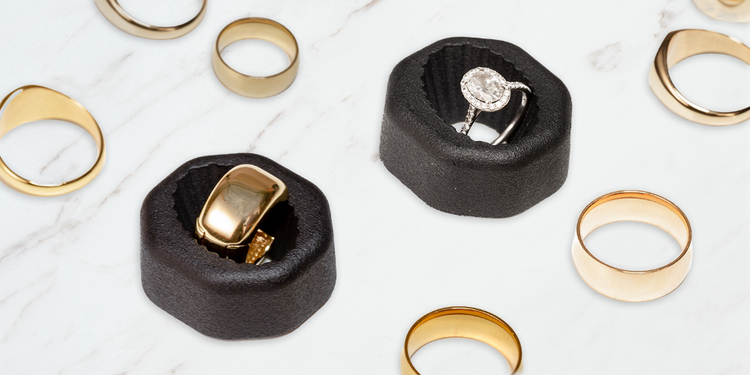
- Maximum Sample Coverage: Position the sample flat against the measurement window, covering as much of the beam area as possible. For small items like rings and chains, coil them over the window or use mounting putty to position the piece directly in the center. More sample in the beam means better statistics and more reliable results.
- Multiple Spot Tests: Gold surfaces are not homogeneous. Because of how alloys are cast and cooled, gold concentration can vary measurably across a single piece. Multiple readings averaged across different areas give a more representative result than a single measurement.
- Plug-In Scripts: Evident's XRF analyzers support plug-in scripts that run automatically after each measurement. These can display the calculated density and conductivity your measured alloy should exhibit, flag non-standard karat results, identify unusual chemistries, and provide custom workflow guidance. This makes XRF both a composition reader and an active decision-support tool.
- Calibation: Generic out-of-box calibration performs well across common alloy families. Accuracy improves significantly when calibration is built around certified reference materials that represent the specific alloy types you test most frequently.
The Five Principles for Professional Gold Testing
Regardless of the methods in your toolkit, always keep these five main principles in mind for successful gold testing:
1. No single method catches every fake. XRF alone addresses approximately 95% of counterfeits—but the cases it misses are often the most valuable ones. Multi-method workflows close that gap.
2. Accuracy has a realistic floor. The best achievable accuracy with fire assay—the most precise method available—is ±0.05-0.1%. Claims of ±0.01% accuracy for any method, including XRF, are not achievable in commercial practice.
3. XRF is a surface measurement. It tells you the composition of the outermost 15 microns. That is not the same as the bulk composition—especially when coatings are involved.
4. Hallmarks are declarations. Verify them analytically; do not use them as a reference against which to question your instrument.
5. Accuracy comes from consistency. Understanding your samples, maintaining your calibration, and keeping your quality control process intact matters more than the specification sheet of any single device. Don't turn off your judgement because you turned on your analyzer.
The Gold Analysis Testing Guide: Identify Fakes, Validate Purity, and Work Faster with XRF
Gold Analysis Webinar with Evident Experts James Parker and Vladimir Vermus
In the gold industry, trust is everything. And trust is never built with just one button. Check out our exclusive new webinar that takes a deeper dive into all the ways you can find practical clarity in a market where mistakes can be costly.
James Parker, Product Management and Marketing Leader, and Vladimir Vermus, ANI Sales Manager, cover how modern fakes are designed and detected, what accuracy expectations are realistic for XRF, how to build a multi-method workflow, and the XRF testing tips and tricks that make the biggest difference in day-to-day operations. This session includes live demonstrations and a Q&A from gold professionals in the field.
If you’re a trader, jeweler, refiner, pawnbroker, recycler, or gold assayer, watch our webinar and learn gold alloy fundamentals, how to test purity accurately, red flags for fake or plated items, how built-in density and coating tools speed evaluations, and the advantages of the Evident Vanta™ GX XRF solution.
Schedule a Free XRF Demo
See first-hand how Evident's benchtop and portable XRF analyzers can support your gold testing workflow. Schedule a free personalized demo today to explore calibration options, plug-in script customization, and how XRF fits into a professional multi-method authentication process.
Schedule Your Demo here

Product Management and Marketing Leader, EMEA, Evident
With prior experience as an XRF user in industrial manufacturing before joining Evident in 2011, James Parker now leads product management and marketing for the EMEA region. His deep understanding of Evident’s XRF product portfolio makes him a key resource for both the company and its distributors. James provides advanced technical product and application support for the Western European distribution network and directs product management and marketing initiatives across Europe, the Middle East, and Africa. His expertise spans a wide range of industrial applications. He also supports legacy products, ensuring comprehensive coverage across Evident’s analytical instrumentation portfolio.

Business Specialist, Analytical Instruments
Vladimir Vermus has a bachelor’s degree from Moscow Mining University and 10 years’ experience in portable X-ray fluorescence (XRF) analysis at Evident. He started as a sales engineer with four years in direct sales, then later managed the development of XRF analytical instrument sales in the Commonwealth of Independent States (CIS). Vladimir currently specializes in marketing, sales, and applications for XRF analyzers in Europe, the Middle East, and Africa (EMEA).