How Aviation Organizations Use XRF to Prevent FOD and Ensure Engine Safety


As aircraft production rates increase and engine designs grow more complex, ensuring material integrity and preventing metal debris have become critical priorities for both aerospace manufacturers and maintenance, repair, and overhaul (MRO) organizations. Even microscopic metal fragments can pose a serious risk to engine reliability and flight safety.
Throughout engine manufacturing, assembly, and overhaul, components move through numerous machines, fixtures, tooling interfaces, and inspection stages—most of which are constructed from metal alloys. Each interaction can introduce a potential source of metallic debris, making rapid identification essential when contamination is discovered.
Metallic debris: A Hidden but Serious Risk
Tooling and machine components are subject to wear mechanisms such as abrasion, fatigue, corrosion, and improper handling. Over time, this wear can generate small metal particles that may remain within engine modules or assemblies. these fragments can lead to accelerated wear, component damage, or in-service failures.
Because aircraft engines pass through multiple manufacturing and maintenance steps, determining where a metal fragment originated can be a complex and time-sensitive challenge.
XRF analyzer Enables Rapid Identification of Metallic Debris
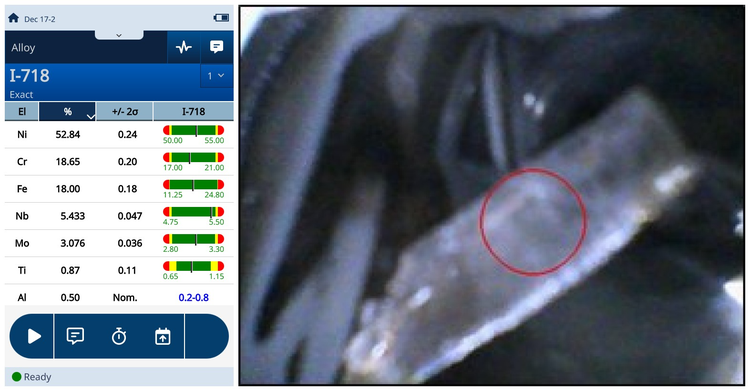
X-ray fluorescence (XRF) analysis plays a critical role in aviation investigations by providing fast, non-destructive elemental analysis of small metal fragments. Portable XRF analyzers enable teams to perform positive material identification (PMI) directly on the shop floor, without the need for laboratory testing.
In a matter of seconds, Vanta determines the elemental composition of a metal particle and matches it to a specific alloy grade—such as nickel-based superalloys, titanium alloys, aluminum alloys or stainless steels—using an integrated alloy library. Even very small fragments can be analyzed using portable workstations, ensuring accurate results while maintaining safe handling practices.

From Alloy Identification to Root-Cause Resolution
Once Vanta analyzer identifies the alloy grade, investigators can correlate the result with known materials used in engine components, tooling, fixtures, or production equipment. Customizable alloy libraries allow organizations to link specific alloy grades to individual tools or engine assemblies.
For example, if a fragment is identified as a nickel-based alloy commonly used in turbine tooling or casing fixtures, maintenance teams can quickly narrow the investigation to a specific process step or location. This significantly reduces troubleshooting time and helps prevent repeat incidents.
Strengthening Preventive Maintenance and FOD Programs with XRF
By combining Remote Visual Inspection (RVI) and XRF into routine wear metal response and preventive maintenance workflows, aviation organizations can move from reactive troubleshooting to proactive risk mitigation. Rapid alloy identification supports targeted inspections, timely repairs, and process improvements—reducing unplanned downtime and costly rework.
Ultimately, Vanta analyzer enhances engine quality assurance, supports regulatory compliance, and helps ensure that engines entering service meet the highest standards of safety and reliability.