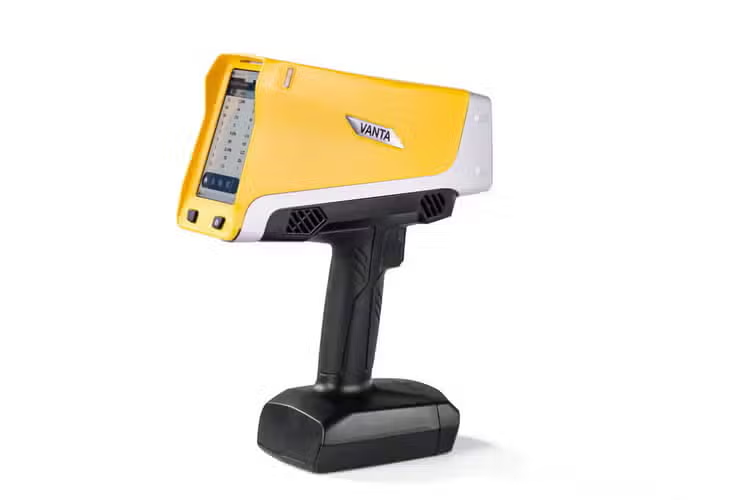
Faster Decisions in Rare Earth Element Exploration: A Practical Guide to Handheld XRF


Rare earth elements (REEs) are no longer a niche specialty. Today, they sit at the center of the clean energy transition, the electric vehicle supply chain, consumer electronics, and defense priorities around the world. As the demand for REEs accelerates, the pressure on exploration and mining teams to find new deposits, characterize them accurately, and bring them into production continues to grow.
Speed, accuracy, and real-time insight are what allow teams to keep pace with the REE market. Traditional lab-based workflows simply can't move fast enough to meet demand.
Handheld XRF technology is helping close the gap. Let’s take a closer look at what makes REEs difficult to analyze in the first place, how modern XRF instruments address challenges, and how real-time data can be put to work across workflows, from first survey to final product.
Why Rare Earth Elements Matter Right Now
REEs are a group of 17 metallic elements consisting of the 15 lanthanides plus Yttrium (Y) and sometimes Scandium (Sc). Despite the name, REEs aren't actually rare in the Earth's crust; rather, they are rarely found in concentrations that make extraction economically viable.
REEs fall into two broad categories. Light REEs (Lanthanum [La] through Samarium [Sm]) are abundant and generally easier to extract. Heavy REEs (Europium [Eu] through Lutetium [Lu], plus Yttrium [Y]) are more scarce, often more valuable, and typically harder to process.
The importance of REEs comes down to where they fall within modern technologies:
- Clean energy: Neodymium (Nd) and Praseodymium (Pr) are used in the high-strength magnets that power wind turbines. Dysprosium (Dy) adds heat resistance to the permanent magnets in electric vehicle (EV) motors, while Lanthanum (La) plays a role in battery chemistry. Magnets in EV motors use Nd, Pr, and Dy to create smaller, lighter, more powerful motors.
- Electronics and displays: Europium (Eu), Terbium (Tb), and Yttrium (Y) produce the phosphors behind the bright, accurate colors in smartphone, TV, and LED screens.
- Defense and aerospace: Guidance systems, radar, sonar, and advanced alloys used in aircraft all depend on REEs, making them strategically important materials for national security.
- Industrial and medical applications: REEs are essential to petroleum refining, glass polishing and optics, and medical imaging systems, improving efficiency, precision, and performance.
Without REEs, many of the renewable and high-tech systems that define modern life would be significantly less efficient—or wouldn’t work at all.
A Supply Chain Under Pressure
Global demand for REEs is accelerating across all of the areas covered above. At the same time, supply is highly concentrated. China currently produces close to 70% of the world’s REE output and holds roughly 38% of global reserves.
This concentration creates real supply chain vulnerabilities for Western economies, and it's a major driver behind the urgency around new domestic REE discovery and production.
Pricing reflects this urgency. While common industrial metals like iron, copper, and nickel trade for a few dollars to a few tens of dollars per kilogram, some REEs can reach into thousands of dollars per kilogram. When the economics are this favorable, the pressure to explore efficiently and accurately grows very rapidly.
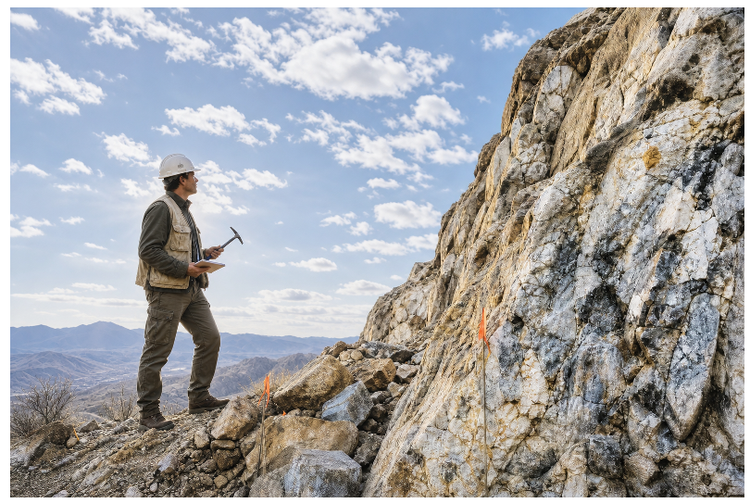
Why Rare Earth Elements Are Difficult to Analyze
Before looking at how XRF helps, it's worth understanding why REE analysis is challenging in the first place.
- Geological diversity: REEs occur across a wide range of geological environments, including beach sands, clay deposits, carbonatites, and pegmatites among them. No single workflow fits every deposit type.
- Low natural abundance: Many REEs occur at parts-per-million or even sub-ppm levels. At those concentrations, signals can sit close to detection limits, increasing measurement uncertainty.
- Matrix effects: Absorption and enhancement effects from iron, calcium, silica, and aluminum can shift the signal in ways that require robust, matrix-matched calibration to interpret correctly.
- Complex mineral hosts: REEs are often locked inside minerals like monazite, bastnäsite, and xenotime. Each releases its REE content differently during digestion or excitation, adding another layer of complexity to workflows.
- Spectral overlap: Many REE emission lines overlap with common elements like iron, cobalt, and manganese (elements present in nearly every ore), making it harder to isolate a clean REE signal at lower excitation energies.
These challenges are exactly why a single test, run once, rarely tells the whole story—and why the traditional lab-only workflow struggles to keep pace.
The Traditional Workflow Gap: Lab-Only Analysis is Limited
In conventional REE exploration, samples are collected in the field and shipped to a laboratory for ICP-MS, ICP-OES, or WD-XRF analysis. Turnaround times can run from three or four days to several weeks. That delay pushes back every decision—where to drill next, whether a target is worth pursuing, how to prioritize a campaign—and adds cost to every shipment.
Lab techniques like ICP-MS do offer excellent sensitivity. But they’re also destructive, slow, and expensive on a per-sample basis. For exploration and mining teams operating under time and budget pressure, the need for fast, reliable, in-field analysis has become essential.
How Handheld XRF Detects Rare Earth Elements
At a basic level, XRF analysis follows a simple sequence: a sample is excited with an X-ray beam, the sample emits a signal in response, that signal is captured and processed, and the resulting spectrum is translated into elemental composition. Depending on the elements present, the spectrum includes K and/or L energy lines. K lines represent high-energy emissions, while L lines represent lower-energy emissions. The quality of the signal, and how much of it the analyzer can capture and interpret, depends heavily on how the sample is excited.
For REE-focused analysis, excitation voltage makes a meaningful difference. At 50 kV, an XRF analyzer can detect several light REEs, including Lanthanum (La), Cerium (Ce), Praseodymium (Pr), and Neodymium (Nd). Stepping up to 55 kV expands that range further, adding Samarium (Sm), Europium (Eu), and Gadolinium (Gd) to the elements that can be reliably detected at the K lines, while also improving detection limits and precision for the elements already in range.
A 55 kV tungsten-anode configuration delivers significantly more X-ray energy in the 40-48 keV range, precisely the range needed to excite the fluorescence lines of light REEs and the first heavy REEs. That additional energy produces a brighter, easier-to-read signal, which translates directly into better detection limits and greater precision.
Heavier REEs such as Terbium (Tb), Dysprosium (Dy), Holmium (Ho), Erbium (Er), Thulium (Tm), Ytterbium (Yb), and Lutetium (Lu) are too energetic to be captured at K lines even at 55 kV, and instead require L lines, which carry their own overlap challenges with common transition elements. Understanding these limits, alongside the gains, is part of using XRF effectively for REE work.
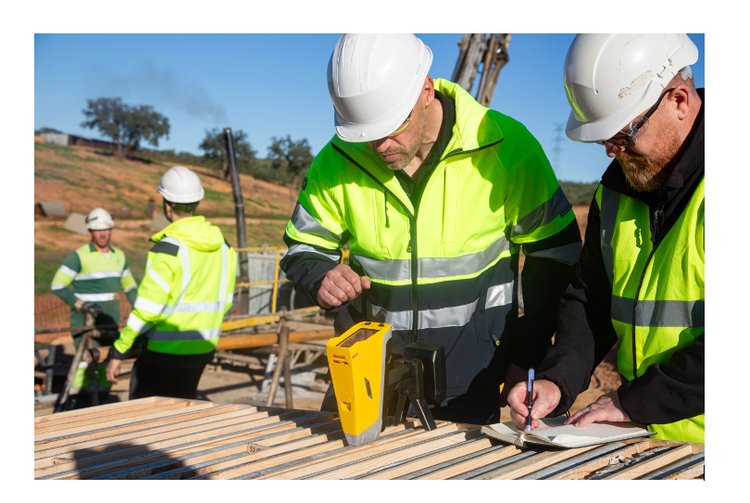
Handheld XRF Across the Exploration and Mining Workflow
One of the most valuable aspects of handheld XRF for REE is that it isn’t limited to a single stage of the process. The same instrument supports mineral exploration, mining, and mineral processing teams, each of which has its own set of decisions to make.
- Mineral exploration: Evident’s rugged Vanta™ handheld XRF analyzers with integrated GPS help explorers optimize field time, maximize drilling and analytical budgets, and advance project timelines for smart decision-making in the field, ultimately reducing exploration time and improving the success rate of drill targets.
- Mining: Vanta XRF analyzers allow fast, accurate decision-making that gives miners substantial cost-reduction opportunities. Fewer grade control samples need to be sent to the mine-site lab, stockpile material can be analyzed to guide blending and feeding of the mill, and mineralogical controls can be rapidly delineated within the deposit.
- Mineral processing: With Vanta analyzers, metallurgists, mineral processing engineers, and lab managers can use real-time analysis to monitor efficiency and optimize processes—analyzing feeds, precipitates, liquids, concentrates, tailings, waste rock, bullion, and activated carbon in real time. This means a clearer geo-metallurgical picture of the deposit.
Portable XRF supports onsite lab operations across all of these functions, giving exploration, mining, and processing teams a shared, real-time view of the same deposit.
Grade Control, Process Optimization, and Cost Reduction
In active mining operations, real-time grade control with handheld XRF allows operators to distinguish ore from waste, identify high-grade zones, and minimize dilution—all before material reaches the mill. Fast, on-the-spot assays support better decisions about how material is blended and fed into processing, reducing the risk of costly mistakes in concentration.
Return on investment shows up in several ways. Teams send fewer samples to the lab for confirmation, which lowers lab costs directly. Faster turnaround shortens exploration campaigns overall, allowing more ground to be covered, and more decisions to be made, in the same amount of time. And because exploration often happens in remote locations, reducing the number of samples that need to be transported also reduces logistics costs. The net effect is more data per dollar: more tests, more information, at a lower overall cost.
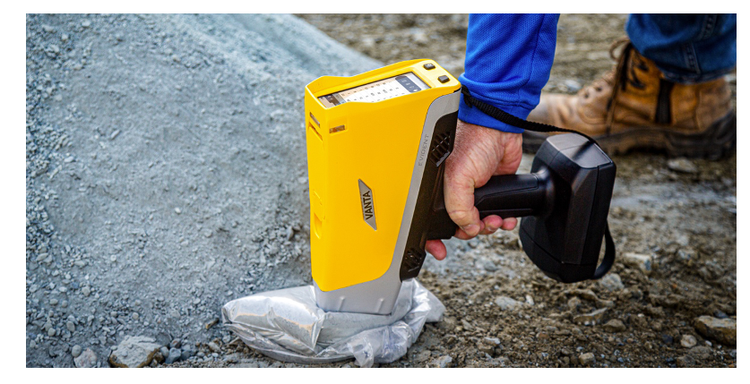
Environmental and Regulatory Benefits
Beyond exploration efficiency, real-time geochemical data also supports better environmental and regulatory outcomes. More targeted drilling, guided by accurate, real-time data, means less land disturbance and a smaller overall footprint. Rapid analysis of tailings helps confirm that no harmful contaminants are being left behind during processing.
For teams that need to report to regulatory agencies, XRF data is traceable and can support permitting and impact assessments. And for organizations building out environmental, social, and governance (ESG) commitments, real-time chemical data across the value chain supports responsible sourcing claims with documentation to back them up.
Unlock Faster Decisions in Rare Earth Element Exploration with XRF
REE Webinar with Evident Expert Edgardo Jimenez, Director of International Mining
In our new webinar, Edgardo Jimenez walks you through the REE landscape, the science behind handheld XRF detection, and how real-time geochemical data is being used across today’s exploration, mining, and processing workflows.
Watch the full webinar for a closer look at the data behind 55 kV versus 50 kV performance, a workflow walkthrough showing how handheld XRF adds value at each stage of the REE value chain, and a live Q&A covering instrument calibration, ruggedness, and model selection for mining and exploration applications.
See how the Evident Vanta Max handheld XRF analyzer can support your REE exploration and mining workflows. Schedule a personalized demo today to explore 55 kV configuration options, GPS-integrated field work, and how real-time XRF data fits into your grade control and process optimization strategy.