Your Complete Guide to Remote Visual Inspection (RVI): 15 FAQs
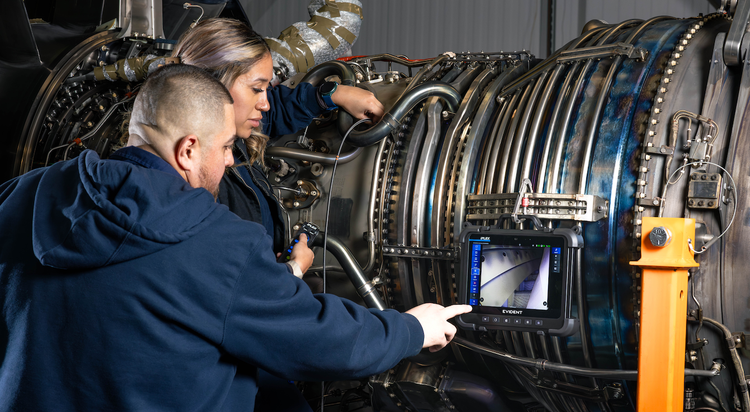

When it comes to keeping critical systems running safely and efficiently, being able to see what’s happening inside is essential. Remote visual inspection (RVI) makes that possible, allowing examination of internal components without disassembly, downtime, or guesswork.
Whether you’re in aerospace, power generation, manufacturing, heavy industry, or security, understanding how borescopes and videoscopes—the key instruments in RVI—work will help you choose the right inspection tool for your precise needs.
To help you get started (or sharpen your expertise), we’ve answered the 15 most frequently asked questions about RVI, featuring insights from Evident’s IPLEX One™ videoscope solution, our newest evolution in industrial RVI technology.
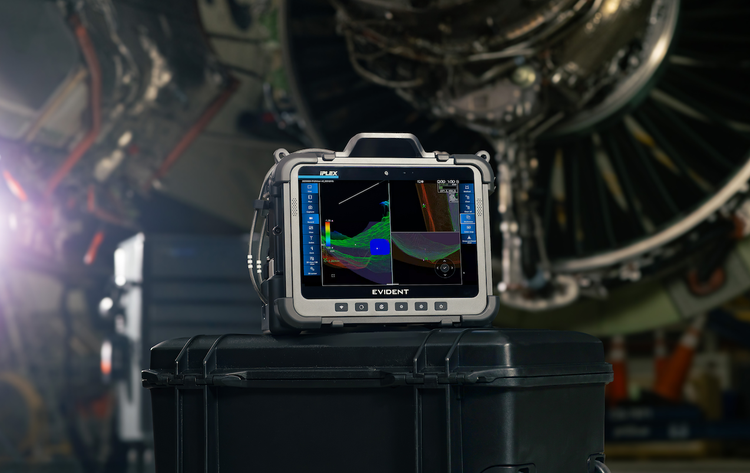
IPLEX One is a software-driven RVI platform that empowers you to work faster, see more, and stay ahead of every workflow demand.
1. What Is a video borescope and how does it work?
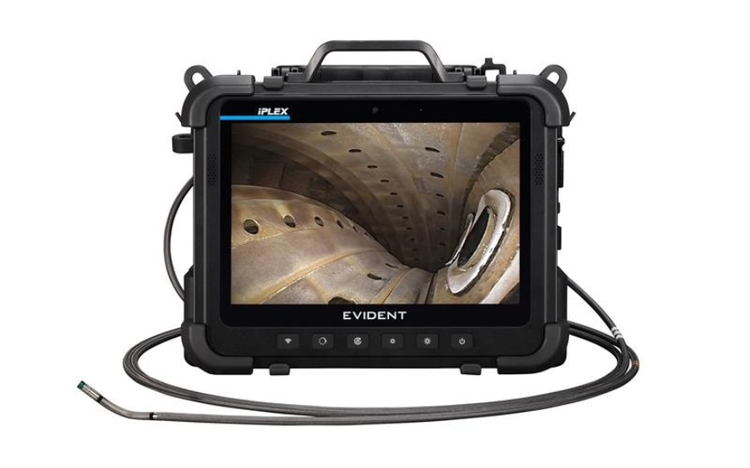
A video borescope is an optical inspection tool that uses a camera, light source, and flexible or rigid insertion tube to capture live video from inspection areas that are otherwise inaccessible. The camera transmits images to a display, allowing inspectors to identify cracks, corrosion, or foreign object debris (FOD).
Evident’s IPLEX One RVI platform builds on this principle with next-generation imaging, advanced optics, and intuitive software-driven control, helping inspectors see more clearly and work more efficiently than ever.
2. What industries or applications use borescopes?
Borescopes play a vital role across many sectors:
- Aerospace: Engine and airframe inspections
- Automotive: Engine and transmission diagnostics
- Energy and power generation: Turbine and boiler inspections
- Manufacturing: Welds, castings, and components
- Oil and gas: Pipeline and pressure vessel checks
The versatility of IPLEX One makes it ideal for all of these environments, offering rugged portability and reliable imaging for both field and facility use.
3. What key features should I look for when choosing a borescope?
When selecting an inspection system, focus on:
- Insertion tube diameter and length suited to your inspection path
- Advanced imaging with bright, adjustable lighting
- Articulation control that allows precise maneuvering
- Durability and portability to withstand real-world conditions
- Software compatibility for data capture and reporting
IPLEX One combines all these features in one unified, software-driven platform, making inspections simpler, faster, and more repeatable.
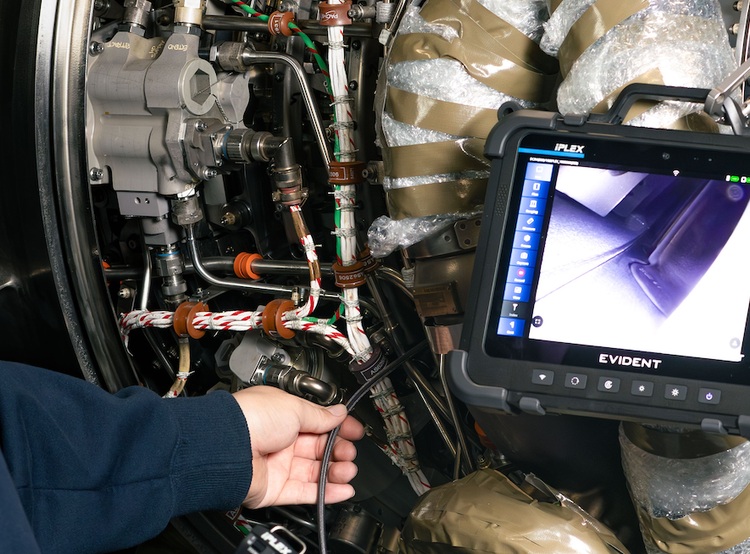
IPLEX One consolidates software, insertion tubes, and tip adapters into a shared platform, improving inspection efficiency and streamlining inventory management.
4. What tube diameter and length should I choose?
Tube size and length depend on your access points and inspection depth:
- Small diameters (2-4mm): Ideal for intricate or narrow spaces such as turbine blades
- Medium diameters (6-8mm): Greater durability and imaging power for general industrial applications
- Lengths: Range from 1 meter to over 10 meters, depending on need
IPLEX One offers interchangeable scopes, allowing teams to adapt to different applications without purchasing new systems.
5. What level of articulation is needed?
Articulation allows users to steer the camera tip inside tight or complex geometries.
- 2-way or 4-way articulation: Sufficient for most general inspections
- Joystick or motorized articulation: Provides precise, one-handed control for more complex areas such as weld seams or compressor blades
IPLEX One’s ergonomic joystick design offers fluid, responsive articulation for confident navigation.
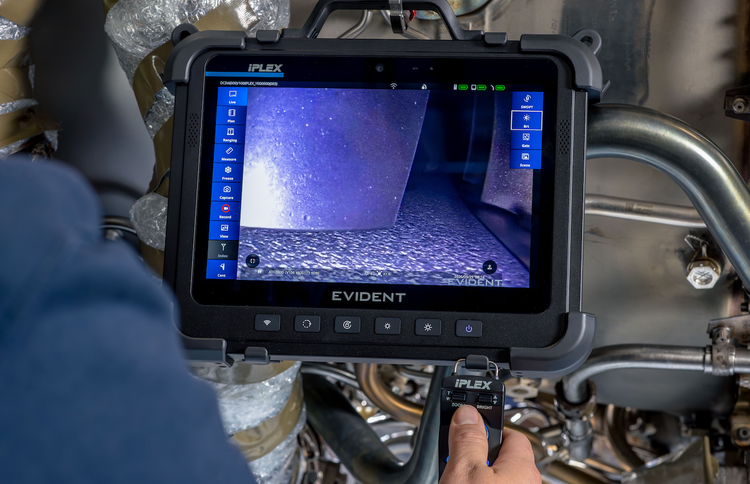
IPLEX One features a brilliant 10-inch anti-reflective touchscreen with real-time, high-resolution imaging across the entire display.
6. How important is image quality?
Extremely. The ability to spot cracks, corrosion, or surface defects depends on image resolution and lighting. Look for systems with high-definition sensors, edge-to-edge clarity, and adaptive lighting control.
With Swoptix™ technology, IPLEX One enables instant switching between near/far and direct/side focus—without removing the scope—delivering sharper imagery and faster inspections.
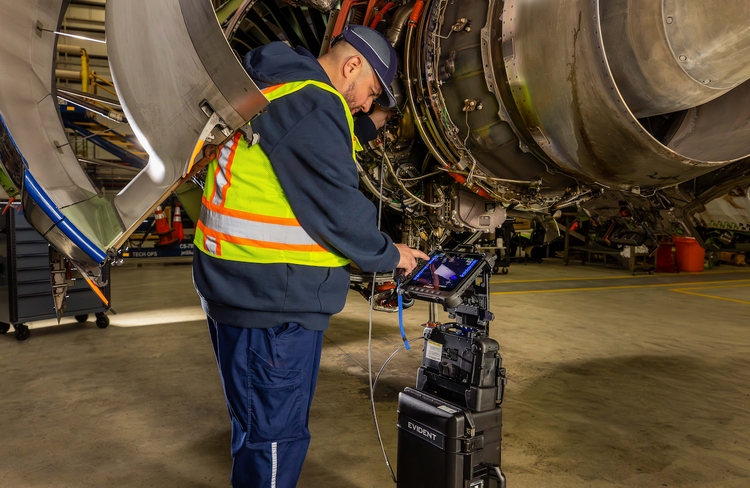
Compact, light, and portable, IPLEX One is easy to transport and use in tight or elevated environments.
Industrial inspections often happen in extreme conditions—high heat, vibration, moisture, or dust.
IPLEX One is built for these challenges. It meets MIL-STD and IP ratings, is drop-tested for field use, and features a lightweight, compact body designed for maximum mobility. A bright 10-inch touchscreen and cable-free setup make it easy to carry and operate anywhere.
8. Can I record and share inspection results?
Yes. Documentation is a key part of RVI. Modern systems allow still images and video capture, plus easy sharing via USB, SD, or wireless transfer.
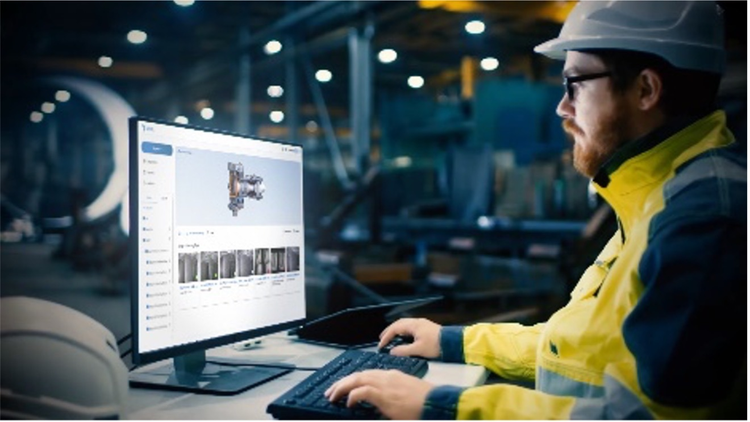
IPLEX One goes further with ViSOL™ software integration, enabling real-time collaboration, automated reporting, and cloud or offline data management—so inspection data is always organized and accessible.
9. What training or certification is required to use a borescope?
Most users can learn the basics quickly, but in regulated industries NDT or RVI certification (such as ASNT Level I/II) may be required.
Evident provides training resources to help users understand system setup, software workflows, and proper inspection techniques, ensuring accurate results and compliance.
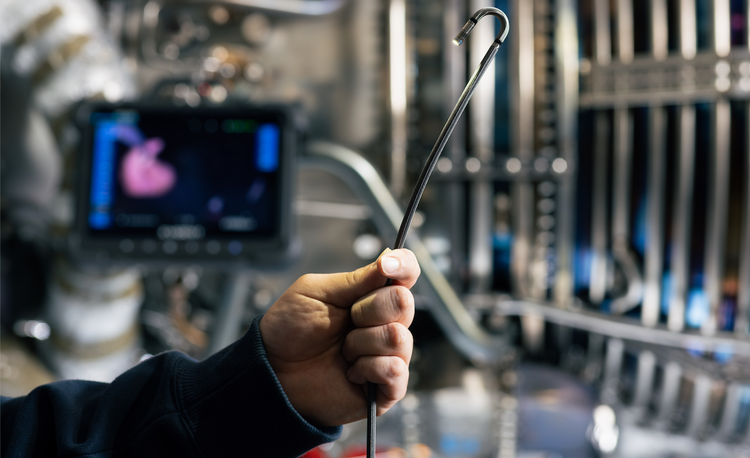
With a shorter distal end that enhances smooth insertion in tight areas, IPLEX One reduces the risk of optical tips being stuck or damaged during inspection.
10. What’s the difference between rigid and flexible borescopes?
- Rigid borescopes: For straight-line inspections where flexibility isn’t imperative
- Flexible borescopes: Ideal for complex geometries or curved paths
- Semi-rigid borescopes: Provide limited flexibility with improved control.
IPLEX One offers flexible insertion tubes designed for precision and durability, backed by an easy-to-handle form factor.
11. Can borescopes be used in hazardous or explosive environments?
Yes—but only if certified for those conditions. Look for ATEX or IECEx certifications for use in hazardous locations.
Evident designs solutions for both standard and restricted-access environments, including radio-disabled models of the IPLEX One for classified facilities or secure sites.
12. Is there a warranty or service plan available?
Most manufacturers offer one- to three-year warranties, with options for extended service or calibration.
Evident supports IPLEX One with global service coverage, quick-turn repairs, and customer-first support, ensuring that your system performs optimally over years of use.
13. What accessories or Upgrades are available?
Common borescope accessories include:
- Interchangeable optical tips (e.g., direct/side view, close-upnear/far focus, wide-angle field of view)
- Custom probes for specialized inspections
- Carrying cases and cleaning kits for field protection
IPLEX One’s tip adapters and modular system design make upgrades easy, allowing teams to customize configurations for any job.
14. What optional upgrades and advanced features are available?
Common optional upgrade features include:
- 3D measurement capability to provide precise quantitative insights into severity of defects
- Reporting analytics (ViSOL Cloud provides advanced analytic capabilities to help identify trends and do more with your inspection data)
- 3DAssist software that provides the ability to generate 3D models from any point on a recorded video
IPLEX One’s modular and highly customizable capabilities provide the flexibility to configure a system that fits your precise inspection needs and budget.
15. Can a borescope be used underwater or in chemical environments?
Many industrial inspections involve harsh substances or wet environments. Always check the IP rating and chemical resistance before use.
IPLEX One systems are water- and dust-resistant, with materials built to withstand industrial fluids—ensuring safe, dependable operation even in challenging environments.
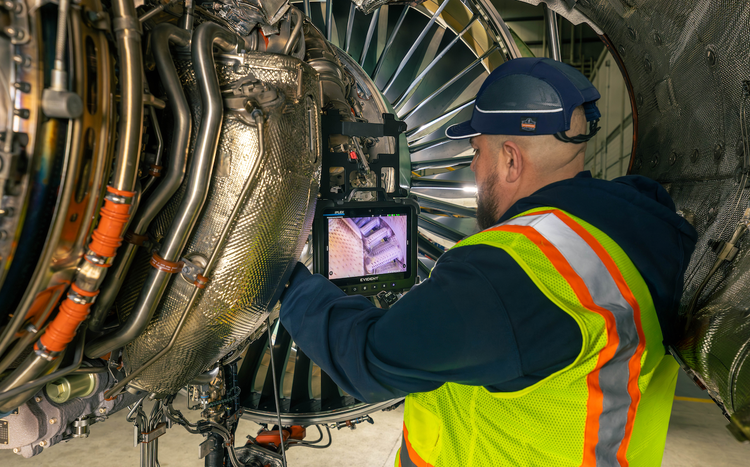
IPLEX One is simple to use, offers bright inspection images in almost any lighting condition, and delivers the highest level of durability.
Schedule a Free IPLEX One Demo
With its rugged design, software-driven flexibility, and unmatched imaging quality, IPLEX One™ is redefining what you can expect from an industrial videoscope, making inspections safer, faster, and more reliable than ever before. Experience the future of RVI for yourself by scheduling a free personalized demo today.
Schedule Your Demo