Ultrasonic Testing of Carbon Steel Plates and Pipes
Thickness and Flaw Inspection Solutions
Carbon Steel Pipes and Plates
Our versatile solution for weld inspections uses a variety of techniques to achieve a productive and efficient inspection on plates and pipes from 3 in. OD and up for circumferential scanning and 6 in. and up for longitudinal scanning. Phased array, time of flight diffraction, and conventional ultrasonic techniques can be used alone or in combination to achieve full coverage of a weld with a high probability of detection.
This solution also includes different scanning methods for accurate defect positioning and sizing. The stability and encoding capability offered by scanners results in better data quality as well as enables code compliant inspections. Different scanners are used for manual, manual-encoded, semiautomated or automated data collection method.
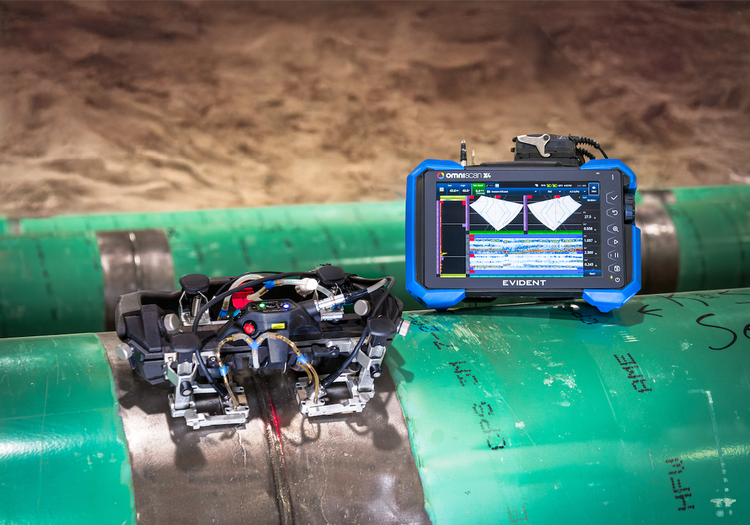
Evident’s carbon steel weld inspection solution brings together our acquisition units, scanners, probes, and software tailored to your needs. The solution enables length and depth sizing for code acceptance /rejection.
Weld Series PA Probes and Wedges
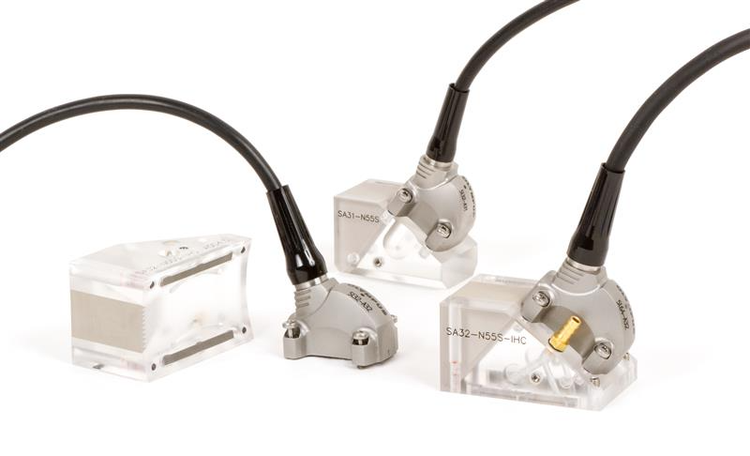
The A31 and A32 phased array probes and wedges offer unique features for a new level of performance.
- Improved signal-to-noise ratio (SNR)
- Ergonomic design
- Improved coupling
- Compatible with compound scan
High Temperature Inspection
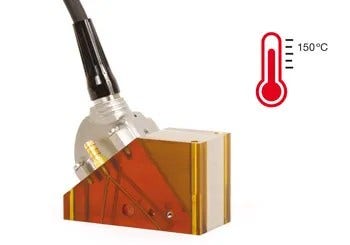
Passive-Axis Focusing (PAF) Wedges

Scanning Methods
Our carbon steel weld solution can be used with different scanning options.
Automated
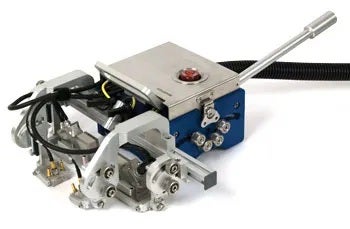
The WeldROVER scanner is the ideal automated scanning option for inspection of carbon steel circumferential weld using one pair of PA probes and up to three pairs of TOFD probes. It provides a faster and more stable movement of the probes for higher rate and more accurate data acquisitions.

For efficient automated scanning of carbon steel welds in difficult-to-reach areas, the motorized SteerROVER scanner enables you to steer the scanner at a distance. Use the SteerROVER scanner with its rugged touch-screen handheld controller to perform reliable phased array (PA) ultrasonic testing of circumferential and longitudinal welds. The optional RECON camera kit assists in navigating the scanner, keeping the weld well centered, and helping ensure that the probes remain in contact with the surface.
Manual and Manual Encoded
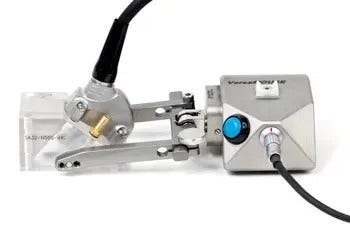
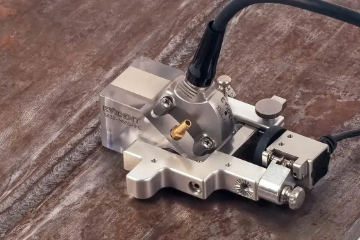
The weld can be scanned manually using one PA probe that can be encoded by attaching a Mini-Wheel encoder or by using a VersaMOUSE hand scanner or the Universal Holder.
Semiautomated

The AxSEAM scanner simplifies long seam weld inspections by using four (4) probes (phased array and TOFD) on pipes with outside diameters of 6 in. OD and larger. It can also be used for circumferential weld inspections on pipes starting at 10 in. in diameter. With the ScanDeck™ module, operators can monitor scan speed and couplant loss in real time and initiate data acquisition directly in the OmniScan™ flaw detector.
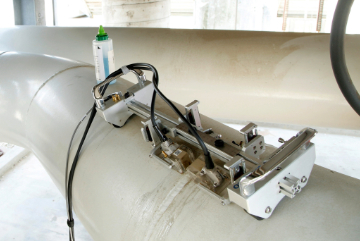
The HSMT-Compact scanner is designed for circumferential weld inspections using four (4) probes (phased array and TOFD) on pipes with outside diameters of 4.5 in. and larger.
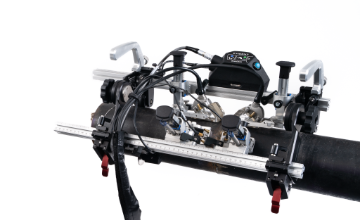
The HSMT-Flex scanner is designed for circumferential weld inspectiond with up to eight (8) probes (phased array and TOFD) on pipes with outside diameters of 4.5 in. and larger when equipped with optional probe holders. Its flexible design enables quick changes between mulitple configurations. With its ScanDeck module, operators can perform remote operations on the OmniScan flaw detector and monitor key parameters such as scan speed and couplant level in real time.

The HST-Lite scanner is designed for circumferential weld inspections using a single pair of TOFD probes on pipes with outside diameters of 4.5 in. and larger.
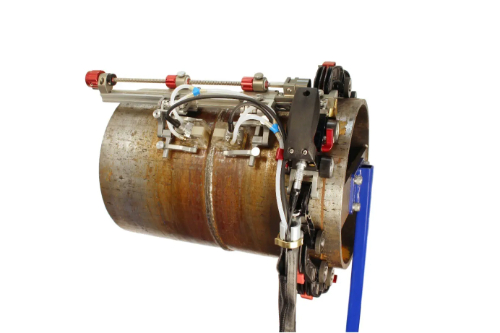
The ChainSCANNER is designed for circumferential weld inspections using a pair of phased array probes on pipes with outside diameters from 3 in. up to 48 in. With an optional kit, it can also be fitted with an additional pair of TOFD probes using additional optional probe holders.
Techniques
Phased array technique allows multiple beam angles, beam types and beam offset to be generated electronically. This allows greater flexibility for easy adaptation to different type of welds.
Conventional UT technique can be an alternative to phased array when very high speed is required or when cost is preferred over flexibility.
TOFD can be used alone for fast and simple inspection or as a complementary technique to pulse-echo.
Combining phased array and TOFD techniques offers the best performance for most carbon steel weld inspection. Both techniques complete each other for excellent imaging, best POD, and flaw characterization.
Applications
- In-service weld inspection
- Pressure vessel and piping construction
- Structural construction welding
- Wind tower construction
