Improving Efficiency in Pipe Inspections Using Videoscopes

Akihiro Yamamoto
April 10, 2026
Making the Most of a Videoscope for Pipe Inspection
Various types of piping and tubing are used across a number of diverse fields including energy, plant operations, and public infrastructure. Regular inspections to detect deterioration and corrosion at early stages are essential for preventing major accidents and ensuring safe facility operation. While various inspection methods can be employed depending on their purpose, visual inspection using industrial endoscopes is an ideal method for examining conditions inside piping such as corrosion, cracks, and welding defects.
Industrial endoscopes are devices that repurpose and optimize medical endoscope technology for industrial use. Their key feature is the ability to visually inspect areas inaccessible to the human eye—remotely and nondestructively. By inserting an industrial endoscope into an inspection area, real-time images of the target can be observed. Operation is relatively simple and maintenance costs are low, making barriers to introduction and operation minimal.
There are several types of industrial endoscopes including rigid borescopes and fiberscopes, distinguished by their observation methods and their application usage. In recent years, videoscopes—which integrate imagers and image recording devices into the optical system—have become widely used across all applications and fields.
Videoscopes offer various options such as insertion tube diameter and length depending on the inspection target and purpose. Selecting a videoscope suitable for the inspection task is crucial to reliably detect corrosion and defects inside pipes and achieve sufficient inspection quality. Furthermore, in cases requiring regular inspection, a videoscope with features that enhance inspection efficiency is important to consider from an economic standpoint.
In this blog post, we explain the key points for selecting the appropriate videoscope for pipe inspection, provide specific examples of challenges encountered during inspection, and focus on the efficiency gains made possible by videoscopes equipped with today’s newest inspection technologies.
How to Select the Right Videoscope
Given the wide variety of piping types, selecting a videoscope with a diameter and length suitable for your specific pipe is fundamental to performing inspections according to the intended purpose. Beyond this, insertion performance and observation performance are key points to consider when selecting a videoscope.
1. Insertion Performance
One factor contributing to high insertion performance is the length of the rigid section at the distal end of the videoscope. The insertion section is designed to accommodate an optical adapter containing an observation lens, which is typically interchangeable depending on the observation purpose. This adapter allows the tip to be curved in the desired direction for observation. When navigating an elbow joint, the insertion section is pushed through while bending the tip. However, depending on the length of the rigid distal end section (including the optical adapter), it may become stuck inside the elbow and fail to pass through (Fig. 1). Insertion sections with a shorter rigid distal end offer an advantage in navigating bends like elbows, resulting in superior overall insertion performance.
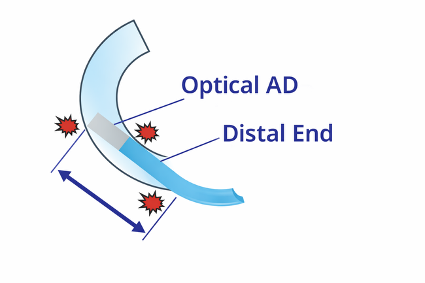
Figure 1: The insertion section may become stuck if the rigid distal end is not the right length.
Another important factor is the rigidity of the insertion section. Even in straight piping without elbows, particularly in long pipes, insufficient rigidity at the root portion of the insertion tube can hinder force transmission during pushing, potentially preventing the scope from reaching the inspection point. Therefore, videoscopes with an insertion tube that possess sufficient rigidity at the root and moderate flexibility toward the distal end offer an advantage in terms of insertion performance.
To reliably reach the target inspection area and perform efficient examinations—the first step in inspection—it is important to select a videoscope that combines a short rigid distal end, enables precise bending maneuvers, possesses sufficient stiffness at the root of the insertion section, and features a mechanism with varying degrees of rigidity (depending on the section) for superior insertion performance.
2. Observation Performance
Regardless of the type of pipe, image quality during videoscope inspection significantly impacts your defect detection rate. Poor image quality increases the risk of overlooking defects during inspection, which can ultimately lead to major accidents.
In a videoscope, light intensity, the imager, and image processing all play crucial roles in determining image quality. Therefore, the highly integrated performance of these elements is essential for a videoscope to deliver the high image quality required to achieve a high defect detection rate. Furthermore, selecting a videoscope equipped with features such as sharpness adjustment, color temperature adjustment, and noise reduction—which can be optimized to suit the inspection subject and application—can further reduce the risk of overlooking defects.
Another critical factor determining observation performance is the quality of the observation lens. High-end videoscopes typically come equipped with a wide range of optical adapters offering different observation focal depths, angles of view, and field-of-view directions. This allows for optimal observation by giving you the ability to select the appropriate near or far focus, wide or narrow range, and direct or side view based on the application and inspection location. For example, a wide-angle direct-view optical adapter can be used to grasp the overall picture inside a pipe with a broad field of view. If a defect is found on the pipe wall, switching to a side-view, near-focused optical adapter allows for more detailed observation of the inspection target.
Advanced Videoscope Features that Enable Even Higher Performance
In addition to the standard performance considerations listed above, some videoscope models incorporate advanced features that enable higher inspection quality and greater efficiency.
1. Live Footage Aligned with the Scope Orientation
During videoscope inspections inside pipes, the similarity of inner wall characteristics makes it difficult to grasp the sense of vertical orientation, frequently leading to loss of position during inspection. This can put you at risk of overlooking necessary inspection areas, resulting in a lower defect detection rate and posing a significant visual inspection challenge.
To prevent this, certain videoscopes feature a gravity sensor mounted on the scope tip, providing a visual display on the screen showing the insertion section's orientation relative to the vertical axis and its rotational direction. Furthermore, if equipped with a function that automatically adjusts the live image's vertical orientation to match the actual vertical axis, the operator can intuitively grasp the vertical orientation regardless of the insertion section's position during manipulation, thereby reducing the risk of overlooking defects (Fig. 2).
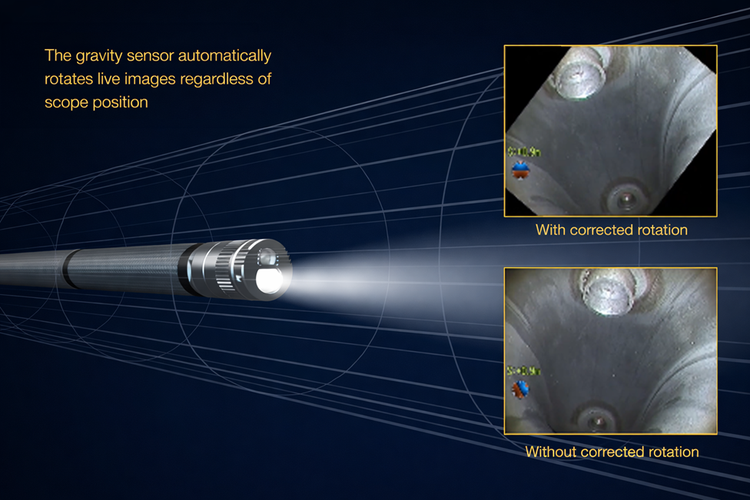
Figure 2: A gravity sensor ensures that vertical orientation is always aligned during pipe inspection.
2. Switch Viewing Direction and Observation Depth with a Single Touch
As previously mentioned, to improve observation efficiency, it is crucial to select a videoscope equipped with the appropriate viewing direction and observation depth for the application and inspection location, or to switch to an optical adapter. However, since the appropriate optical adapter can vary depending on the observation point within the same pipe, the task of repeatedly pulling out the insertion section and swapping the optical adapter arises. This is because videoscopes with an outer diameter of 6mm or less, widely used in pipe inspections, typically have fixed depth of field, viewing angle, and direction of view for each optical adapter due to their size and structural limitations. For this reason, it is ideal to be able to switch observation depth and viewing direction using a single optical adapter.
Some of today’s newest videoscopes now feature fields of view for both near and far focus, as well as viewing directions for direct and side viewing, with models allowing switching between them in a single touch (Fig. 3). A videoscope with this advanced functionality eliminates the need to interrupt the inspection to change optical adapters, leading to significant reductions in inspection time, improved productivity, and reduced costs.
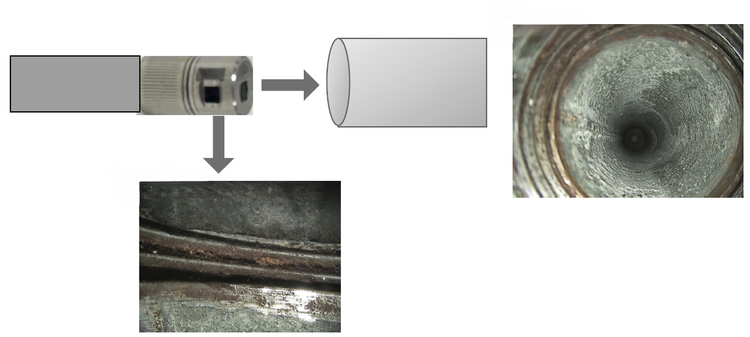
Figure 3: New advanced videoscope systems allow you to switch between viewing directions and fields of view with a simple touch.
3. 3D Imaging: Inspect Defects from Any Angle
For inspection processes used to determine whether the extent of corrosion or cracks on pipe inner walls falls within acceptable limits when compared to specified reference values, a videoscope equipped with measurement functions becomes an effective option. Videoscopes offer various measurement methods, including stereo measurement, phase measurement, and multi-point measurement. For pipe inspection applications, stereo measurement is the most suitable method as it is less susceptible to vibration, has relatively good adaptability even for highly reflective subjects, can handle measurements of complex shapes, and allows for a relatively short rigid distal end even when using a side-view adapter.
Videoscope models equipped with 3D imaging capabilities allow inspection of the shape of target areas that are difficult to grasp from 2D images, enabling examination from any angle. Furthermore, even during measurement, 3D imaging facilitates accurate specification of measurement points. This enhances the reliability of measurement results while simultaneously reducing rework, thereby shortening inspection time.
Even when measuring the depth from the inner pipe wall, such as for wall thinning of a pipe, setting an appropriate reference plane is crucial for obtaining stable measurement results. However, when the surface is curved, setting an accurate reference plane becomes particularly difficult.
When setting a curved surface as your reference plane, videoscopes equipped with the capability to automatically determine the surface shape based on a specified point and set the reference plane can reduce your risk of inaccurate reference plane setup. This enables easier and faster depth measurement.
By displaying elevation differences relative to a specified reference plane in 3D color mapping, the deepest point can be visually identified, enabling confident designation of measurement points. Additionally, a function that automatically calculates and displays the deepest and highest points within the designated measurement area provides accurate data regarding the surface shape of the inspection area (Fig. 4).
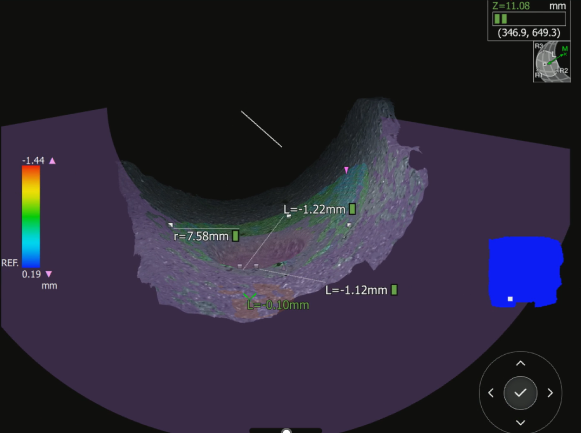
Figure 4: 3D imaging can calculate the deepest and highest points within a specified area, delivering accurate inspection area mapping.
4. High Color Reproduction and Optimized Brightness Adjustment
Inspections of areas such as rust nodules inside pipes require not only identifying their shape and size, but also their color. In visual inspections, accurate color reproduction within the pipe interior is crucial for making appropriate defect determinations.
When selecting a videoscope, choosing a model with image processing capabilities that allow fine-grained adjustment of color temperature from warm to cool tones and enable verification of the results via live video ensures greater reliability in defect detection. Additionally, by utilizing the color temperature adjustment function to emphasize warm tones, it becomes easier to detect rust and other issues while reducing the risk of overlooking them (Fig. 5).
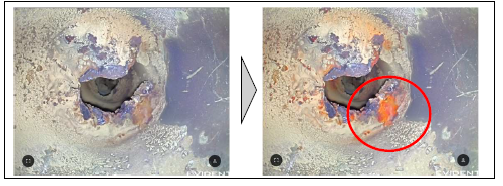
Figure 5: Color temperature adjustment can be used to draw attention to rust and other issues.
Furthermore, when the inner walls of stainless-steel pipes, sanitary piping, glass-lined pipes, and similar conduits possess highly reflective surfaces, the videoscope's illumination can reflect off these surfaces, causing halation and making inspection difficult. Therefore, it is necessary to adjust the brightness of the illumination according to the distance to the inspection target. However, if the illumination is reduced to a level where halation is not an issue, the light may not reach deep into the pipe, potentially reducing inspection efficiency.
Some new videoscope models feature a processor that synchronizes with the illumination system. As the scope approaches the inspection target, it automatically adjusts the lighting to a level that allows observation without causing halation. This eliminates the hassle of manual adjustments, enabling the acquisition of images suitable for inspection. Furthermore, videoscopes with image processing technology that supports a wide dynamic range and maintains visibility in dark areas even when illumination is reduced to prevent halation can support accurate inspection from the front to the rear of the pipe, greatly increasing efficiency.
Choosing the Ideal Videoscope Solution
In this blog post, we focused on key points for selecting the ideal videoscope for visual inspection inside pipes. While factors such as device size, weight, and portability are also considerations beyond the benefits covered here, a videoscope with the capabilities listed above ensures efficient pipe inspection and safe facility operation.
For example, Evident's IPLEX™ One videoscope is the industry's only* device enabling switching between direct and side-viewing, and switching between near and far focus with a single optical adapter. It also incorporates Swoptix™ technology, which enables full-screen measurement—previously unattainable—while retaining the benefits of the stereo measurement method. Given the current widespread challenge of improving productivity in pipe inspections requiring advanced endoscopic examination, including measurement functions, IPLEX One represents a compelling option offering significant advantages in streamlining the inspection process.
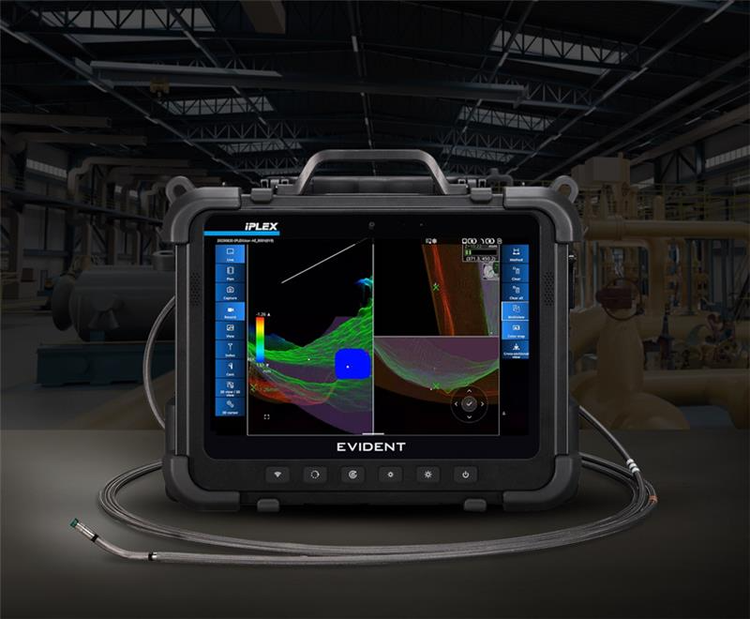
The 10th generation of Evident’s proven IPLEX videoscope system, IPLEX One helps streamline the pipe inspection process regardless of environment, application, or experience level.
IPLEX One Videoscope
IPLEX One empowers pipe inspectors to work faster, see more, and stay ahead of workflow demands with breakthrough optics and measurement technology that unlock unmatched clarity, precision, and speed:
- Swoptix multiview technology: Instantly switch between near and far focus and direct and side view focus without withdrawing the scope
- 3DAssist™ modeling: Exclusive to Evident, 3DAssist software allows you to create detailed 3D images from a single optical path (Fig. 6)
- Single-screen measurement: Instant full-frame 4mm and 6mm measurements increase speed and reduce interruptions to your inspection flow
- Instant edge-to-edge, full-screen clarity: Real-time, high-resolution imaging means accurate defect identification and fast decision-making
- Split-screen viewing: Side-by-side visual comparisons and measurement overlays for deeper inspection insights
Designed to simplify pipe inspections and seamlessly scale for tomorrow’s challenges, IPLEX One features software performance tiers that can be easily upgraded without any hardware changes. And by consolidating software, insertion tubes, and tip adapters into a shared platform, IPLEX One improves pipe inspection efficiency and streamlines inventory management across any number of inspection teams.
[ Schedule a Free IPLEX One Demo ]
Featured Products
*As of January 2026, according to internal research.