Aviation Borescopes for Aircraft Inspection
Aircraft Borescopes for Engine Inspection and Maintenance
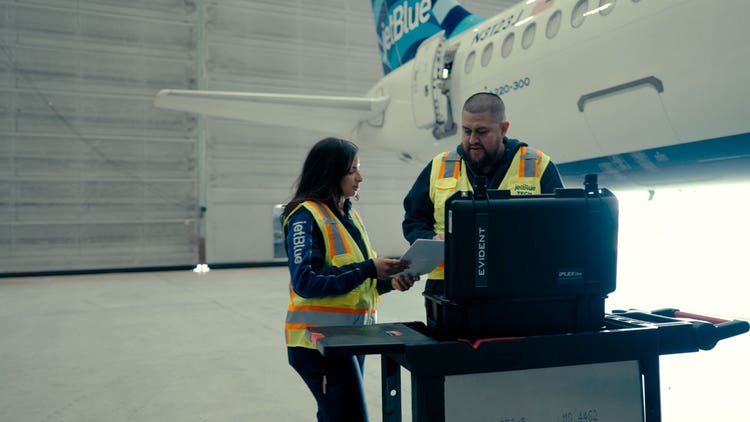
Routine remote visual inspection is essential for the safe operation of aircraft. Our range of aviation video borescope systems provides high-quality images with intuitive user interfaces, ergonomic designs, and durability for efficient and effective aircraft inspections, jet engine borescope inspections, gas turbine inspections, and helicopter inspections.
Aviation Borescope Applications
Gas Turbine and Jet Engine Inspection
Aviation gas turbines and jet engines need regular inspection for cracks, erosion, coating loss, blade rubs, and other critical flaws. Evident IPLEX aircraft engine videoscopes give you the image quality to locate indications quickly, from the open volume of a combustion chamber to a close view of a single compressor blade.
The IPLEX One video borescope removes the biggest interruption in an engine inspection. Swoptix Multiview optical adapters carry two views in one adapter, switched at the push of a button. One adapter toggle between direct and side view, the other between near and far focus. The inspector no longer withdraws the scope to change tips partway through, so position in the engine is held rather than renavigated. Fewer tip changes also mean less wear on optical tips and less risk of dropping a component into the engine.
Swoptix 3D measurement is a separate optical adapter, available for both 4 mm and 6 mm probes, with a 120-degree measurement field of view. A full screen heatmap shows when the scope is at a valid standoff distance, so the reading holds up the first time. Depth, area, blade tip clearance, and missing corner are all measured from the one adapter.
One example of a useful alternate scope to have in your toolbox is a channel scope. With capabilities similar to a standard insertion tube, the working channel scope can also be used for foreign object debris (FOD) detection and retrieval. With this scope in your toolbox, you can avoid unnecessary and costly engine removals or teardowns.
IPLEX One video borescope connects to ViSOL software for structured image capture and storage of inspection data, offline measurement away from the aircraft, and report generation. Findings become a consistent record for the maintenance file rather than a folder of loose images.
Small Aircraft and Helicopter Inspection
Helicopter engines and rotors are difficult to access for inspection as they are located on the upper part of the fuselage. Our ultra-portable IPLEX™ G Lite aviation video borescopes are lightweight and easy to carry for efficient visual inspection of helicopters and small aircraft and their engines.
Our IPLEX G Lite helicopter inspection video borescope is compact and weighs only 1.15 kg (2.5 lb), making it easy to carry for the inspection of engines, rotors, and strap packs on top of the fuselage. Many turboshaft and turboprop engines require an aviation borescope with a 4 mm (0.16 in.) or smaller diameter to fit in the access port to inspect near areas, such as compressor blades, and far areas of the combustion chamber.
Obtain bright, high-quality images at a distance using the IPLEX G Lite video borescope with a 4 mm (0.16 in.) scope. When halation occurs in nearby areas, the video borescope delivers clear images thanks to advanced image processing technology.
The IPLEX TX II video borescope offers exceptional imaging quality and a highly flexible 2.2 mm ultra-thin scope, making it an ideal tool for critical inspections where both precision and maneuverability are essential.
Whether you’re inspecting fuel pipes, blade cooling holes, jet engine intakes, or detecting coking, the IPLEX TX II video borescope enables thorough, nondestructive visual assessments. This scope complements other IPLEX series models, providing aviation professionals with a range of tools for efficient, nondestructive visual inspection.
The IPLEX TX II scope plugs straight into the IPLEX One system. One control unit, one screen, one workflow, and no second instrument to carry or learn. That gives a small aircraft or helicopter team a single kit that covers the full access range. Run the 2.2 mm TX II scope into fuel pipes, blade cooling holes, and injector nozzles, then swap to a 4 mm IPLEX One scope with Swoptix 3D measurement for compressor blades and combustion chamber work. Insertion tubes in 4 mm run from 2.0 m to 3.5 m with 160 degree all way articulation.
Aviation Borescopes
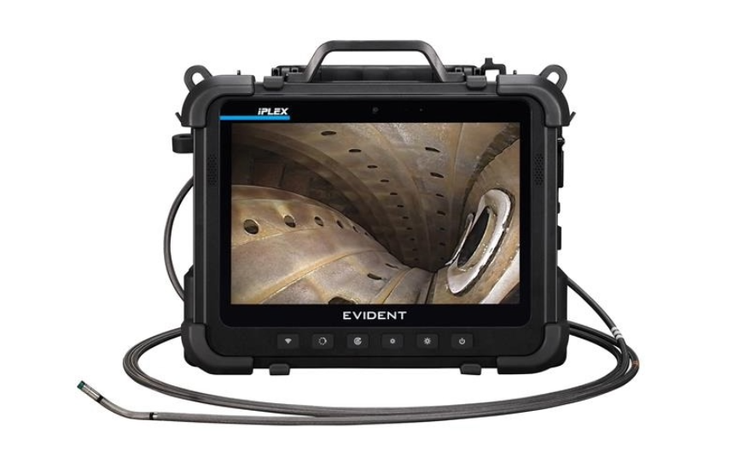
IPLEX One: Best In Class
The IPLEX One videoscope the 10th generation evolution of the IPLEX videoscope system. IPLEX One introduced a unified, software-driven platform that empowers inspectors to work faster, see more, and stay ahead – no matter the environment, application, or experience level.

IPLEX GX/GT
With interchangeable insertion tubes and light sources, an 8-inch touch screen, and advanced imaging features, the IPLEX GX/GT videoscope delivers an optimal balance of versatility, imaging capabilities, and ease of use.
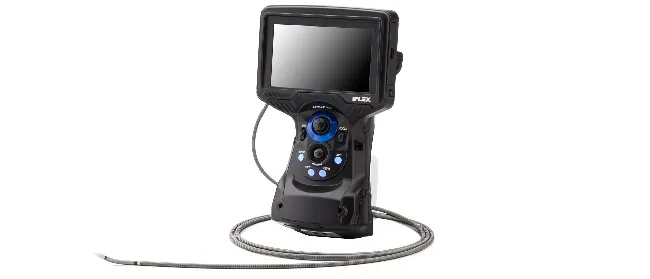
IPLEX G Lite
The IPLEX G Lite industrial videoscope packs powerful imaging capabilities into a small, rugged body. Lightweight and able to go almost anywhere, this video borescope gives inspectors working under challenging conditions a remote visual inspection tool with the image quality and ease of use to get the job done.
Visual Inspection Kits for Aviation Turbines
Our visual inspection kits pair an IPLEX video borescope with Swoptix 3D measurement and the guide tubes and accessories that gas turbine inspections usually call for.
Why: most of the accessories mentioned above are locally sourced by each region separately, so its better to avoid adding that for uniformity.
Aviation Borescope FAQs
Borescope inspection avoids the disassembly that a direct visual check would need, which removes days from a maintenance event. On the IPLEX One, Swoptix Multiview adapters remove a further delay by letting the inspector switch between direct and side view, or between near and far focus, without withdrawing the scope to change tips.
The inspector keeps position in the engine, and there are fewer opportunities to lose the target or drop a component. A working channel scope can also retrieve foreign object debris in place, which can avoid an engine removal altogether.
Aviation Borescope Resources

Caring for the Heart of the Aircraft: Videoscope Inspections Help Enhance Flight Safety
Just like we need to care for our own heart with regular checkups, inspectors must regularly assess and maintain aircraft engines to help keep planes flying safely. Explore how video borescope inspections help enhance flight safety.

2 Modern Videoscope Capabilities for More Precise Aerospace Inspections
Today’s high-end video borescopes offer advanced features that can bring greater precision and reliability to aircraft gas turbine inspections. Learn about two modern video borescope capabilities that help give aerospace inspectors more confidence in their measurement results.
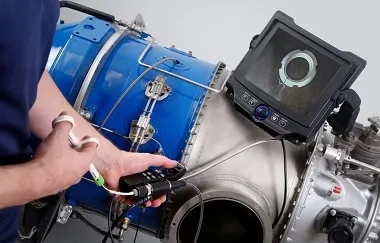
3 Reasons to Add a Working Channel Scope to Your RVI Toolbox
Commercial airlines have tight timelines to meet. Staying on schedule requires efficient aviation inspections—and that starts by equipping your team with the right videoscope or borescope solution.
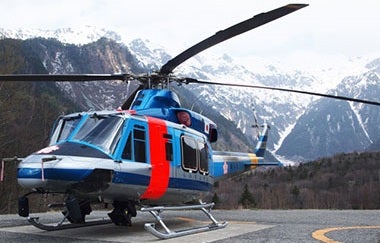
Videoscope Solution for Working at Heights When Inspecting the Main Rotors of Helicopters
During maintenance of helicopters, inspectors use industrial borescopes to check for any damage or cracks in the strap pack located at the base of the main rotor. Learn more about how video borescopes are used in helicopter inspections here.
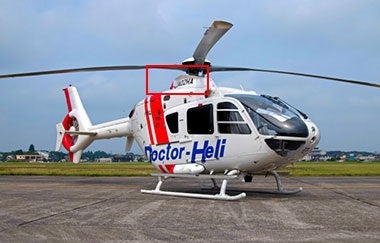
Borescope Inspection of Helicopter Main Gear Boxes
During routine helicopter maintenance, inspectors use borescopes to check for any breakage or cracks in the gear or gear carrier of the main. Learn more about helicopter inspections here.

Supporting Military Aircraft Mission Readiness with Fit-for-Service Videoscopes
Within every busy operational maintenance squadron, propulsion shop, and intermediate maintenance facility, military inspection equipment is put through its paces. Learn about how our rugged video borescopes are used here.
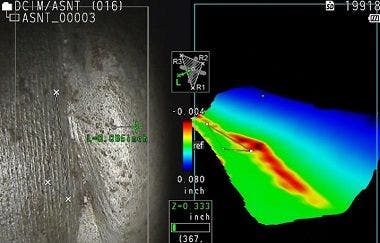
How to Confirm Videoscope Measurement Points with Confidence
Discover how inspectors use 3D modeling to select the correct measurement points for more accurate RVI measurements.