Aviation NDT Solutions
You Make the Call.
We Make You Confident.
Aircraft safety depends on the quality and reliability of every component, from manufacturing through maintenance and repair. Nondestructive testing (NDT) enables aerospace professionals to detect cracks, corrosion, delamination, and other hidden defects without damaging critical parts.
Evident provides aerospace NDT solutions that support inspection teams throughout the aircraft lifecycle. From aerospace part inspections during production to routine maintenance and MRO operations, our inspection technologies, software, and support services help teams make improve efficiency and keep aircraft operating safely.
https://adobeassets.evidentscientific.com/content/dam/tnm/videos/JetBlue_FullVideo_060926_1.mp4

See How Evident NDT Solutions are Used at JFK International Airport
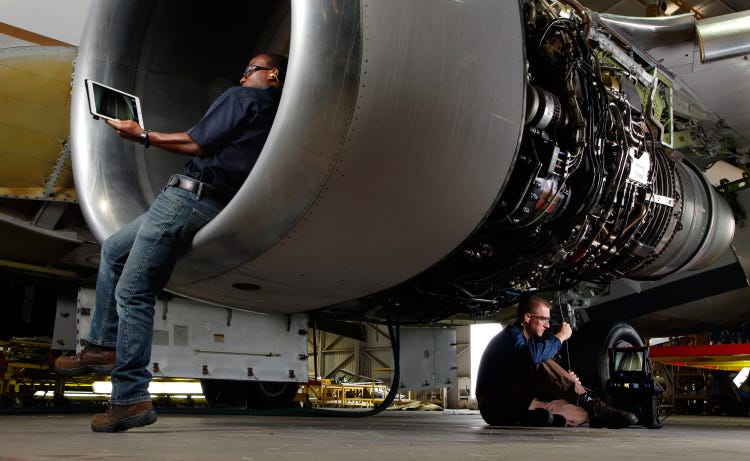
Inspection Tools Built for What You Can’t Afford to Miss
In the aerospace industry, there is no margin for error. Every aircraft component—from composite wing structures and fuselage panels to engine components and fastener holes—must withstand demanding operating conditions while meeting strict regulatory and quality requirements. Even the smallest defect can affect performance, reliability, and safety if left undetected.
NDT allows aerospace manufacturers and maintenance teams to inspect critical components without causing damage, enabling defects to be identified before they become costly repairs or safety risks. Regular aerospace NDT inspections support quality assurance, regulatory compliance, and informed maintenance decisions throughout an aircraft’s service life.
Why Aviation NDT is Important
Modern aircraft incorporate advanced materials, increasingly complex designs, and rigorous quality standards that make aerospace inspections more demanding than ever. Inspection teams must identify extremely small defects while minimizing aircraft downtime and maintaining complete documentation for regulatory compliance.
Common challenges include:
- Detecting small cracks, corrosion, and material defects before they impact performance.
- Inspecting complex components and hard-to-reach areas, such as engines and turbines.
- Evaluating composite structures for delamination and damage.
- Maintaining consistent inspection processes across facilities.
- Managing inspection data and documentation for traceability and compliance.
Despite these challenges, reliable NDT remains essential across aerospace manufacturing and maintenance. With the right inspection technologies, organizations can improve inspection accuracy and reliability, ensuring confidence in every decision.
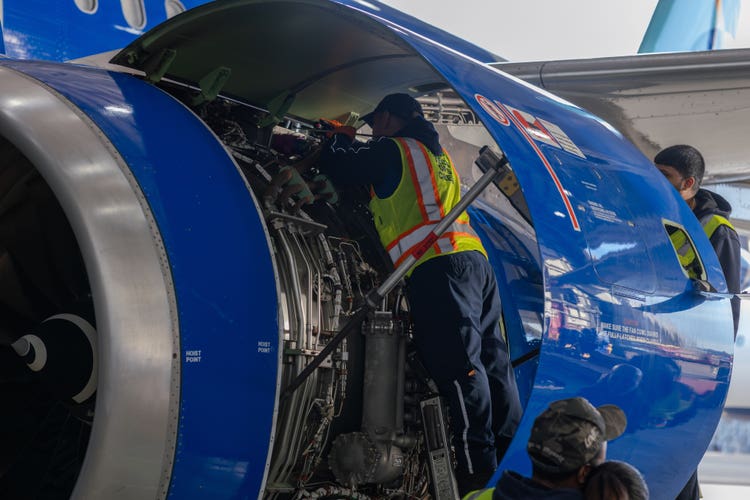

Evident Aviation NDT Solutions
Our comprehensive portfolio of aerospace NDT solutions is designed to support aircraft manufacturing, maintenance, repair, and quality assurance. From detecting hidden defects to verifying materials and managing inspection data, our technologies help aerospace professionals make confident decisions throughout the aircraft lifecycle.
Phased Array & Ultrasonic Flaw Detection
Phased array ultrasonic testing (PAUT) and conventional ultrasonic testing use high-frequency sound waves to detect internal defects that cannot be identified through visual inspection. These methods provide detailed imaging of materials and are widely used to evaluate critical aerospace components, including composites, bonded structures, welds, and metal parts.
Our phased array and ultrasonic flaw detectors best suited to aerospace applications include the OmniScan™ X4 Phased Array Flaw Detector, 39DL PLUS™ Ultrasonic Thickness Gauge, and 72DL PLUS™ Ultrasonic Thickness Gauge.
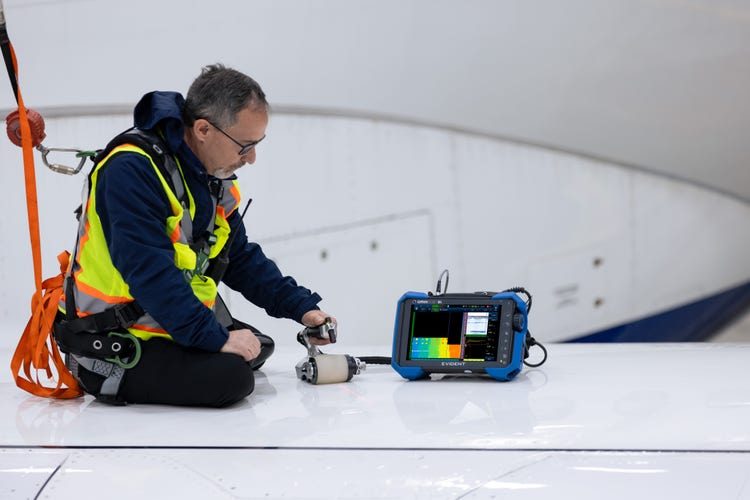
Used for:
- Inspecting composite aerospace structures for delamination, voids, and impact damage
- Evaluating bonded components and structural assemblies
- Detecting internal cracks, inclusions, and defects in metal components
- Inspecting welds, forgings, and other critical aircraft parts
Benefits:
- High-resolution imaging of internal defects
- Accurate defect sizing and characterization
- Reliable inspection of complex materials and structures
- Increased inspection coverage and efficiency
- Greater confidence in inspection results
Eddy Current Flaw Detection
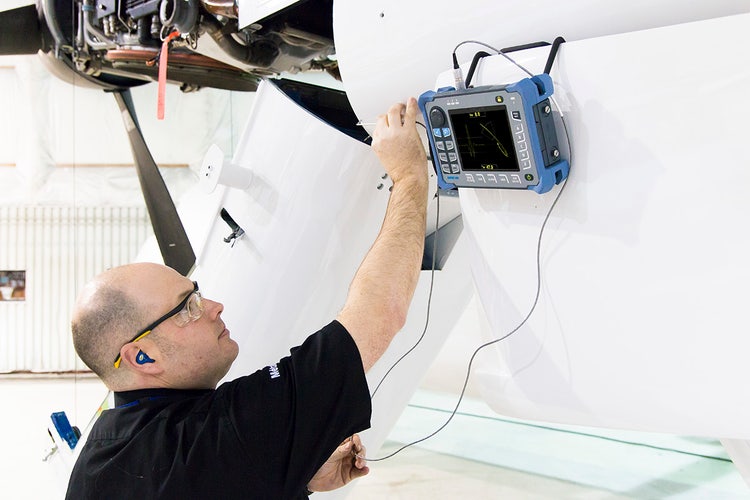
Eddy current testing is a widely used aerospace NDT method for detecting surface and near-surface defects in conductive materials. By identifying changes in electrical conductivity and material properties, eddy current inspection helps locate cracks, corrosion, and other discontinuities in critical aircraft components.
Our eddy current flaw detectors best suited to aerospace applications include the NORTEC™ 700 Eddy Current Flaw Detector.
Used for:
- Inspecting fastener holes for fatigue cracks
- Detecting surface cracks in fuselage skins and aircraft structures
- Identifying corrosion and material degradation
- Inspecting engine components and other conductive materials
Benefits:
- Detects small surface and near-surface defects
- Requires minimal surface preparation
- Supports fast, efficient inspections
- Helps reduce unnecessary component removal
- Portable solutions for field, hangar, and in-service inspections
Remote Visual Inspection
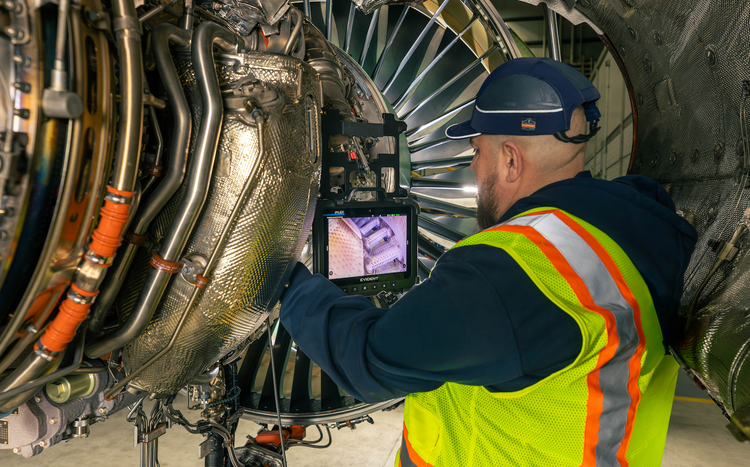
Remote visual inspection (RVI) allows aerospace professionals to examine difficult-to-access internal components without disassembly. Using advanced videoscopes, inspectors can capture detailed images and videos to evaluate aircraft engines, turbines, and other critical systems.
Our video borescopes best suited to aerospace applications include the IPLEX™ One Videoscope Solution and IPLEX™ GX / G Lite Videoscopes.
Used for:
- Inspecting aircraft engines and turbine components
- Identifying foreign object damage (FOD), wear, corrosion, and cracking
- Evaluating internal areas that are difficult to access
- Supporting scheduled maintenance and troubleshooting inspections
Benefits:
- Inspect components without costly disassembly
- Reduce aircraft downtime and maintenance costs
- Capture inspection images and videos for documentation
- Improve inspection speed and efficiency
- Support faster maintenance decisions
Analytical Instrumentation
Material verification is essential in aerospace manufacturing, where incorrect material composition can impact component performance and safety. X-ray fluorescence (XRF) analyzers enable rapid material identification and alloy verification to confirm aerospace materials meet required specifications.
Our XRF analyzers best suited to aerospace applications include the Vanta™ Handheld XRF Analyzer.

Used for:
- Positive material identification (PMI)
- Verifying alloy composition of aerospace materials
- Inspecting incoming materials before production
- Supporting quality control and manufacturing processes
Benefits:
- Fast and accurate material verification
- Helps prevent costly material mix-ups
- Supports aerospace quality assurance requirements
- Enables confident material identification in the field and production environments
- Improves inspection efficiency during manufacturing
Learn More About Analytical Instrumentation
Digital Solutions
That Connect Data with Decisions
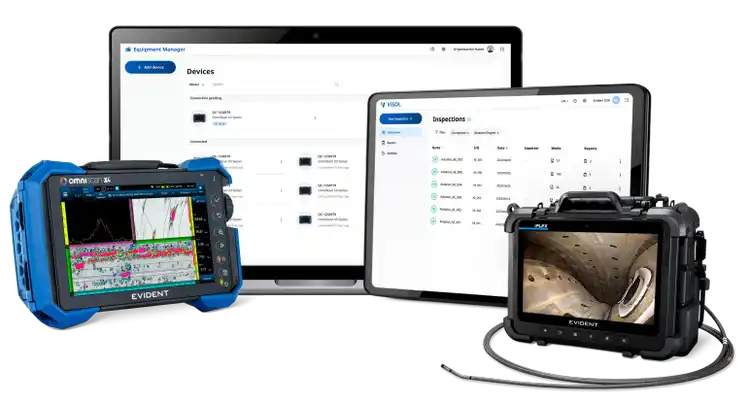
From aerospace-specific software that turns raw inspection data into clear, actionable findings, to cloud-connected platforms that keep teams aligned and reports audit-ready, to real-time project and fleet management, our digital ecosystem is designed around aviation's pace, precision, and compliance demands. And with intuitive, effortless
interfaces and seamless continuity across devices, Evident empowers you to complete inspection tasks faster and with fewer clicks.
Our digital ecosystem includes:
- Data analysis software: AeroView™ PAUT Analysis Software
- Remote visual inspection (RVI) software: ViSOL™ Visual Inspection Workflow Solution and 3DAssist™ Modeling Software
- Connected inspection platforms: Evident Connect™ and X4 Remote Collaboration Service (X4 RCS)
Service And Support
Designed Around the Way You Work
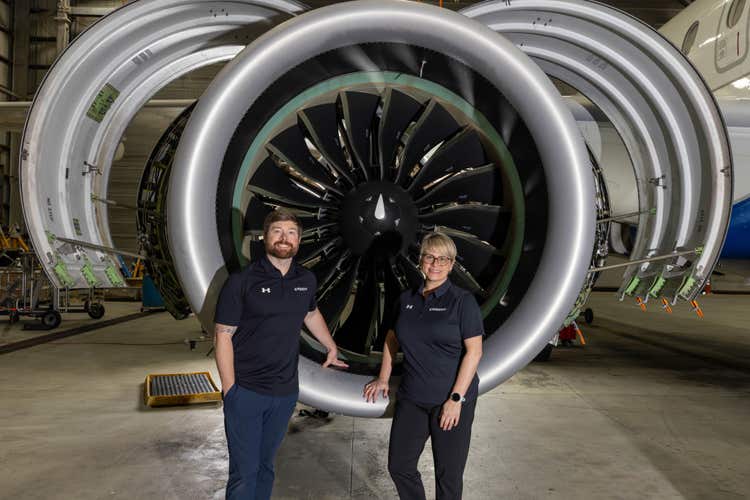
When inspection decisions impact aircraft safety and reliability, you need more than advanced technology, you need a trusted partner with the expertise and support to help you act with confidence. Evident combines aerospace NDT solutions, industry knowledge, and global service capabilities to support inspection teams throughout manufacturing, maintenance, repair, and overhaul (MRO).
Our team of NDT specialists, field service engineers, and technical experts helps organizations optimize inspection programs through:
- Aerospace-focused training for eddy current, PAUT, bond testing, and remote visual inspection (RVI)
- Technical guidance, instrument configuration, and application support
- Calibration, repair, and preventative maintenance services
- Software support and digital inspection platform updates
- Custom probes and transducer solutions for specialized applications
From aerospace manufacturers and MRO providers to commercial aviation, defense, and space programs, Evident helps inspection teams find hidden defects, make confident decisions, and keep aircraft operating safely.
Explore more aviation and aerospace applications and blogs written by experts at Evident.
FAQs
The most common NDT methods used in aviation include:
- Ultrasonic testing (UT): Uses high-frequency sound waves to detect internal defects, including cracks, voids, and delamination in metals and composite materials.
- Phased array ultrasonic testing (PAUT): Provides detailed imaging of internal structures for advanced defect detection and characterization.
- Eddy current testing: Detects surface and near-surface cracks, corrosion, and material changes in conductive aerospace components.
- Remote visual inspection (RVI): Uses videoscopes to inspect hard-to-reach areas, such as aircraft engines and turbine components, without disassembly.
- Material analysis: Uses technologies such as XRF to verify alloy composition and confirm material specifications.
The appropriate method depends on the component, material, inspection requirements, and type of defect being evaluated.
Aviation NDT can detect a wide range of defects and material conditions, including:
- Surface and subsurface cracks
- Fatigue cracking
- Corrosion and material degradation
- Delamination in composite structures
- Disbonds between bonded materials
- Voids and inclusions
- Weld defects
- Foreign object damage (FOD)
- Material inconsistencies and alloy variations
By identifying these issues early, NDT helps inspection teams make informed maintenance and manufacturing decisions.